The Deal Behind the Creation of Vatican City
Because of the Pope’s Passing…
This week, many people around the world are talking about Pope Francis. He was a kind and modern spiritual leader. Because of this news, I wanted to share a story about the Pope—not just as a religious leader, but also as a political figure.
Did you know? Even though the Pope lost a country over 150 years ago, today he is still the head of a tiny state called Vatican City. How did that happen? Let’s go back to the 19th and 20th centuries to understand this strange and important story.
In the Past, the Pope Had a Country
For over a thousand years, the Pope ruled a real country in central Italy called the Papal States. This country was not small—it included cities like Rome, Bologna, and Ravenna. The Pope was not just a religious leader—he was a king, a judge, and a general.
But in the 1800s, Italy started to become one united country. In 1870, the new Italian government took Rome. The Papal States were gone.
The Pope was very angry. He said:
“I will not accept this. I’m a prisoner in my own palace.”
For almost 60 years, the Popes refused to leave the Vatican or talk to the Italian government.
The Lateran Treaty: A Political Deal with Mussolini
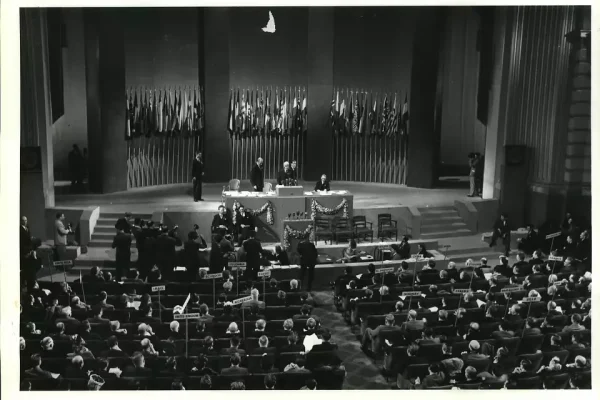
Then, in 1929, something changed. The Pope and Italy’s leader, Benito Mussolini, signed a treaty. It was called the Lateran Treaty.
In this deal:
- The Pope said: “Okay, I accept that Italy owns Rome.”
- Italy said: “We will give you a new, small country—Vatican City.”
This new country is only 0.49 km²—smaller than many city parks! But it’s an independent state. The Pope became a head of state again, with a passport, money, army, and flag.
So… the Pope lost a big country, but got a new political status.
A Tiny Country With Big Power
Today, Vatican City is the smallest country in the world. But it has a lot of influence. Why?
Because over one billion Catholics around the world still follow the Pope. And the Pope can speak about peace, war, climate change, or human rights—and many people listen.
Even world leaders want to visit the Pope.
So next time someone says,
“The Pope is just a religious leader,”
you can say,
“Actually, he’s also a head of state—with his own country!”