The Writers and the Written-About
書寫者與被書寫者
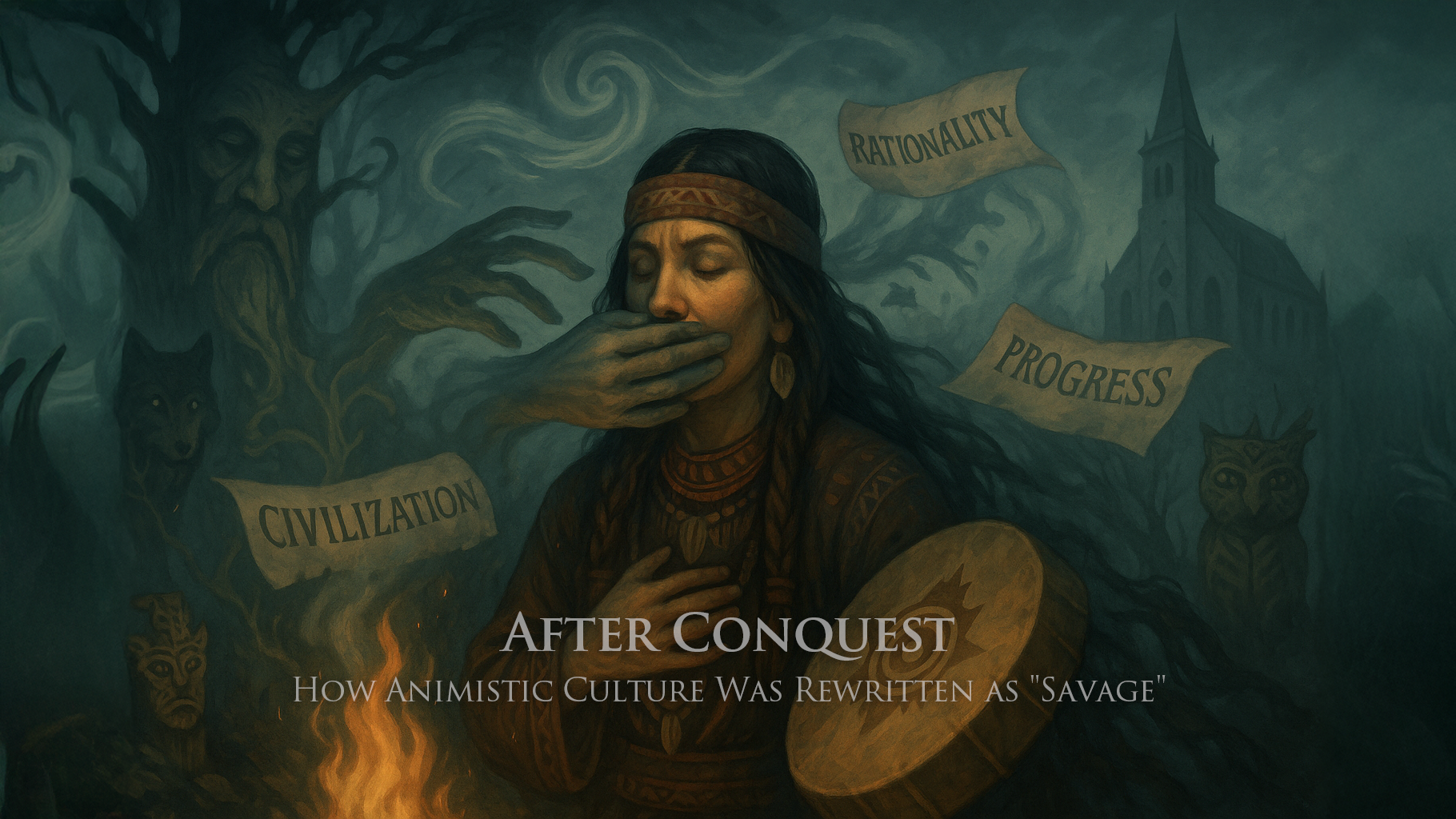
The pen of history has never been a mere recorder; it selects, omits, and reshapes the forms of civilization that once existed. In the narratives woven by modern nation-states and monotheistic religions, many cultures and societies rooted in animistic beliefs were gradually pushed to the margins. No longer seen as coherent systems with their own internal logic, they became synonymous with being “uncivilized,” “superstitious,” or even “barbaric.”
歷史的筆不只是記錄,它同時選擇、刪除,並重組那些曾經存在的文明樣貌。在近代民族國家與一神論宗教聯手編織的敘事中,許多以泛靈信仰為核心的文化與社會,被逐漸邊緣化。他們不再被視為有其內在邏輯的文明體系,而成了「未開化」、「迷信」乃至「野蠻」的同義詞。
Yet the disappearance of these cultures was rarely due to technological inferiority or fragile institutions—it was the result of a war over narrative power. When progress, reason, and the sacred came to be defined from a single central axis, all other voices were denied space to stand.
但這些文化的消失,往往不是因為技術落後,也不是因為社會制度薄弱,而是敗於一場權力話語的戰爭。當世界開始由單一中心定義進步、理性與神聖,其他聲音便失去了立足之地。
Whose civilization, whose Other
誰的文明,誰的他者
In the world where animistic beliefs run deep, mountains, rivers, stones, trees, animals, and ancestral spirits are all vessels of the sacred. From the Viking tribes of Scandinavia to the Baiyue of the South and the Inca of South America, these societies had their own cosmologies, and ethical systems rooted in coexistence with nature and communion with ancestral spirits.
在泛靈信仰深根的世界裡,山河、石木、動物與祖靈都是靈性的容器。從斯堪地那維亞的維京部落,到南方百越與南美印加,這些社會有自己的宇宙觀,也有一套與自然共生、與祖靈對話的倫理系統。
But as monotheistic or single-ethic systems such as Christianity, Islam, and Confucianism began expanding outward, these animist societies were renamed. Shamans became sorcerers; rituals became superstition; faith became backwardness. The image of the Other was not born of misunderstanding—it was carefully crafted. Through language, law, and religion, the conquerors reframed their seizure of land as a mission of “civilizing.”
但隨著基督教、伊斯蘭教與儒教這類一神或單一倫理體系開始向外擴張,這些泛靈社會被重新命名了。巫師成了妖人,儀式成了迷信,信仰成了落後。他者的形象不是來自誤解,而是經過精心雕琢。透過語言、法律與宗教,征服者將對土地的掠奪轉化為對文明的「教化」。
The Silencing of Spirit-Mediators
靈媒的消音
Animist cultures often granted women unique religious and social roles, yet such systems—where gender and spirituality were deeply intertwined—posed a potential threat to monotheistic religions centered around male deities.
泛靈文化往往賦予女性特殊的宗教與社會角色,然而這種性別與靈性緊密相連的社會架構,對以男性神為中心的一神宗教構成了潛在威脅。
Thus, during the witch hunts of medieval Europe,tens of thousands of women—folk healers, midwives, or spirit-mediums—were burned alive, accused of colluding with demons. Their knowledge and sacred roles were recast as symbols of fear and heresy. In China, from the Han dynasty onward, Confucian states repeatedly banned female-led rituals, labeling them as “disorderly and improper worship.” Women shamans of southern cultures like the Baiyue and Minyue were deemed delusional and monstrous, and gradually excluded from both religious and political spheres.
於是在歐洲中世紀的女巫審判中,我們看見上萬名作為民間療癒者、助產士或靈媒的女性被以「與惡魔勾結」為由燒死;她們的知識與神聖性,被轉譯為恐懼與異端的象徵。在中國,自漢以後的儒家國家不斷以「淫祀亂政」之名禁止女性主導的祭儀,百越、閩越等南方文化中的女性巫師則被視為妖妄之人,被逐漸排除出宗教與政治權力場。
Similar purges took place in Southeast Asia and the South Pacific. Female shamans among the Dayak people of Borneo and certain tribes in the Philippines once served as crucial mediums for ancestral communication, but were gradually replaced or marginalized after the arrival of Islam and Christianity. In ancient Celtic cultures, revered goddesses and priestesses were eventually demonized, their once-sacred images shattered and transformed into negative figures—“witches,” “forest hags,” and other monstrous archetypes.
類似的清洗也發生在東南亞與南太平洋群島。印尼婆羅洲的達雅克族(Dayak)與菲律賓某些部族中的女薩滿,曾是族人通靈、祭祖的重要橋梁,卻在伊斯蘭或基督宗教傳入後,逐漸被取代、邊緣化。在古凱爾特文化中,一度受到尊崇的女神與女祭司,也在基督教化的過程中被妖魔化、形象破碎,甚至轉化為「女巫」、「森林女妖」等負面意象。
All these cases show that the silencing of spirit-mediators was a systemic act of power seizure. These were not merely acts of religious cleansing, but a redrawing of who could speak for the divine—and who had the right to interpret the world.
這些例子都顯示靈媒的沉默是制度性的奪權。這些行動並非純粹的宗教清洗,而是誰能代表神、誰能解釋世界的權力重劃。
The Label of “Irrationality”
「不理性」的標籤
Animistic cultures coexist with nature, worship mountain and water spirits, and cherish the memories of land and ancestors. However, such a worldview cannot be accommodated within the modern civilizational narrative centered on “conquering nature,” “rational logic,” and “linear progress.” As a result, symbols of animistic belief—such as tattoos, sacrifices, shamanic rituals, and animal totems—came to be seen as symbols of primitiveness, emotionality, and even cruelty.
泛靈文化與自然共生,信奉山靈水神,重視土地與祖靈的記憶,但這樣的世界觀無法被納入以「征服自然」、「邏輯理性」、「直線進步」為核心的現代文明敘事中。於是,泛靈信仰的象徵——刺青、獻祭、巫術、動物圖騰——被視為原始與感性,甚至殘忍的象徵。
It is undeniable that some animistic cultures did practice rituals that we would now consider cruel or even inhumane. It is undeniable that some animistic cultures did practice rituals that we would now consider cruel or even inhumane. In some parts of Africa, practices such as female genital mutilation and the use of human organs in witchcraft still persist today. In Scandinavia, Viking nobles buried female slaves alive as sacrificial offerings. These practices undeniably challenge our fundamental understanding of the value of life and bodily autonomy. As a result, they have been gradually phased out over the course of history, which is part of the progress of human civilization.
不可否認,部分泛靈文化中確實存在我們今日視為殘酷甚至不人道的儀式。中南美洲的阿茲特克與瑪雅文明曾進行活人獻祭,為太陽神提供「燃料」;非洲部分地區至今仍有女性割禮、以人體器官從事巫術的習俗;在斯堪地那維亞,維京貴族將女奴活祭陪葬。這些行為無疑挑戰了我們對生命價值與身體自主的基本認知,也因此在歷史演進中逐步被淘汰,正是人類文明進步的一部分。
However, the issue is not whether certain traditions are changed, but whether these cultures are entirely defined as “irrational” or “barbaric” others. But if the cruelty of the rituals is the only thing emphasized, while the philosophy of living with nature, communal ethics, and cosmology are erased, it becomes a monopoly of discourse. I believe that the definition of civilization should be able to encompass the various forms of wisdom that humanity has explored. Otherwise, “rationality” becomes merely an ideal image crafted by dominant civilizations to justify their expansion.
然而,問題不在於是否改變某些傳統,而在於這些文化是否被整體定義為「不理性」或「野蠻」的他者。但如果只放大祭祀的殘酷,與自然共生的哲學、社群倫理與宇宙觀則被一筆抹煞,那就成為一種話語權的壟斷。我認為文明的定義也應該能夠容納人類曾經嘗試過的各種智慧形式,否則「理性」就只是少數強勢文明為自身擴張所描繪的理想形象。
Recommodifying Culture
文化的再商品化
Ironically, many animist cultures that were once destroyed have now reappeared on modern tourist maps under the guise of “indigenous experiences” and “exotic spectacles.” Oppressed beliefs and forbidden rituals have been repackaged into costumes, dances, festivals, or spiritual healing workshops—stripped of their sacred context and absorbed into the tourism industry.
諷刺的是,許多曾被摧毀的泛靈文化,如今卻以「原住民體驗」、「民俗奇觀」的形式,重新出現在現代旅遊地圖上。曾經被壓迫的信仰、被禁絕的儀式,如今被包裝成服飾、舞蹈、節慶或靈性療癒課程,脫離原本的神聖語境,變成觀光產業的一部分。
In South America, indigenous peoples of the Amazon traditionally used Ayahuasca in shamanic rituals as a sacred means to communicate with ancestral spirits and seek physical and spiritual healing. Today, it has become a high-priced spiritual tourism trend. Some tour groups even organize “purification retreats” where participants take the brew together to enter a hallucinatory state—often without proper understanding of cultural knowledge or taboos. Cases of overdose-related deaths and crimes committed in altered states have been reported. To meet market demand, some shamans are pressured to simplify—or even reconstruct—their rituals, turning solemn beliefs into commercialized products and staged performances.
在南美洲,亞馬遜流域原住民族使用死藤水進行薩滿儀式,原是與祖靈對話與身心療癒的神聖實踐,如今卻成為高價靈性旅遊的熱門選項。一些旅行團甚至安排「淨化營」讓參與者集體服藥進入幻覺狀態,而這些過程往往缺乏文化知識與禁忌理解,曾有遊客服用過量而死亡或者在神智不清下犯案。為迎合市場需求,部分薩滿也被迫簡化、甚至重構儀式內容,將原本莊嚴的信仰轉化為市場上的商品與表演。
In Southeast and East Asia, female shamanic rituals once condemned as “heretical” or “perverse” are now revived as tourist festivities—like spirit medium ceremonies in Northern Thailand, spirit-possession dances in Vietnam, or spirit-medium performances in parts of Taiwan. These are increasingly staged for outsiders, rather than practiced as sacred rites within faith communities.
在東南亞與東亞,曾被視為「淫祀」、「妖妄」的女性巫儀,如今常以觀光節慶形式復現——泰國北部的靈媒儀式、越南女靈媒的上身舞蹈,甚至台灣某些地方的乩童、祭典,也逐漸被安排成外來者的觀賞節目,而不再是信仰社群內部的神聖實踐。
These cultural revivals may appear to be acts of renewal, but they are often accompanied by a loss of context and a weakening of cultural agency. What gets seen is no longer the worldview and values of the culture itself, but a version filtered and interpreted by outsiders. The languages and rituals that once communicated with nature and the cosmos now survive only under stage lights and ticketed admission. Once stripped of context, faith loses its autonomy all the more completely.
這些文化重現表面上看似是一種復興,但背後卻伴隨著語境的流失與主體性的削弱。被看見的,不再是文化自身的世界觀與價值,而是它們被「他者」解釋與詮釋後的版本。那些與天地萬物溝通的語言與儀式,如今只能透過舞台燈光與門票來證明自己的存在。信仰被剝離語境,主體性消失得更徹底。
The Responsibility of the Victors
勝利者的責任
From colonial expansion to globalized systems, and from educational institutions to technological frameworks, the operations of modern society have been deeply shaped by certain civilizational logics—such as rationality, efficiency, control, and linear progress. When this way of thinking becomes the sole standard of reference, other cultural systems of knowledge, forms of belief, and sets of values are often pushed to the margins—deemed backward, overly emotional, or in need of “civilizing” or “saving.”
從殖民擴張到全球化體系,從教育制度到科技結構,現代社會的運作深受特定文明邏輯的塑造,例如理性、效率、控制與線性進步的觀念。當這種思維成為唯一的參照標準,其它文化的知識體系、信仰形式與價值觀,往往被排除在主流之外,被視為落後、感性,甚至需要被「教化」或「拯救」。
Yet a truly mature civilization should not be built upon the silence of others. Cultures that were once forced into silence still survive today—resilient, quietly preserving their traditions in overlooked corners of the world. If modern society claims to be open and inclusive, its next step should not be merely to repackage cultural difference into consumer goods, but to learn how to listen—how to allow multiple languages and value systems to converse on equal ground within a shared world.
然而,一個真正成熟的文明,不應該建立在他者的沉默上。那些曾被迫噤聲的文化,其實至今仍在許多角落頑強生存,默默傳承。如果現代社會自許為開放與包容,那麼下一步應該不只是包裝異文化成為消費商品,而是學習如何傾聽,如何讓多種語言與價值觀在同一個世界中平等對話。
For communities that were once forced to alter their way of life, states and societies have a responsibility to create institutional environments where real choices are possible. This does not mean forcing them back into tradition, nor pressuring them to assimilate into modernity, but rather granting the genuine freedom to choose—whether to live in closer continuity with their ancestors or to find their own balance between old and new.
對那些曾被迫改變生活方式的群體,國家與社會有責任為他們創造可以自由選擇的制度環境。不是強迫他們返回傳統,也不是推著他們融入現代,而是給予真正的選擇權──讓他們能決定自己是否要走向與祖先更接近的生活方式,或在新舊之間找到自己的平衡點。
Dominant civilizations cannot claim the right to define the world without acknowledging the homogenizing consequences of those definitions. Only then can we truly move toward a future built on respect for difference and the possibility of plural coexistence.
強勢文明不能只享有定義世界的權力,卻不回應這些定義所導致的單一化後果。唯有如此,我們才可能真正走向一個尊重差異、多元共生的未來。