The Birth of Beer: From Accident to Daily Life
啤酒的誕生:從偶然到日常
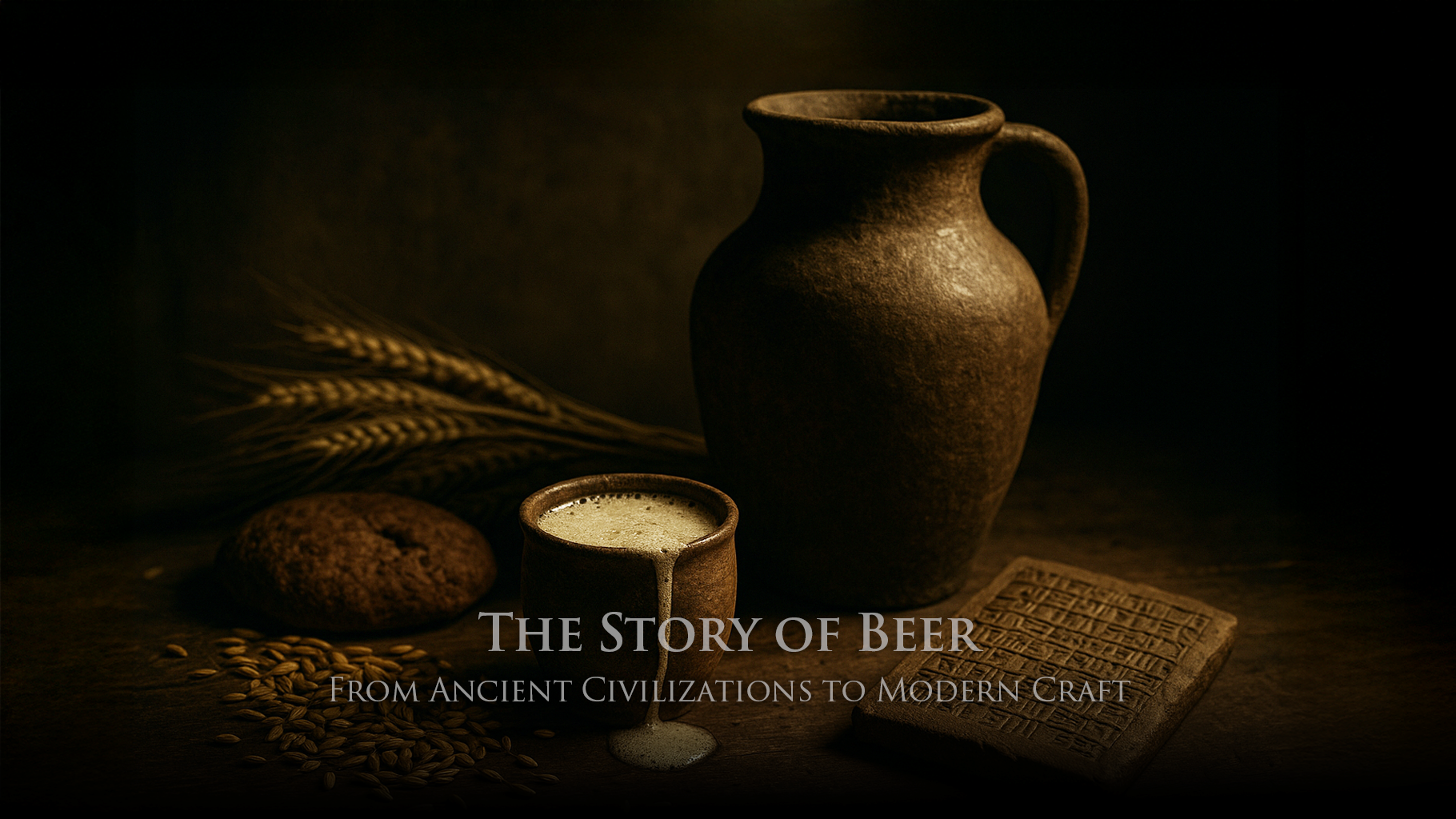
The history of beer is almost as old as human agriculture. The earliest beer was likely an accidental discovery—grains left in a clay jar were soaked by rain and naturally fermented, turning into a fizzy, mildly intoxicating drink. This accidental discovery eventually became an intentional brewing practice in ancient Mesopotamia, making beer one of the first man-made alcoholic beverages.
啤酒的歷史幾乎與人類的農耕文明一樣古老。最早的啤酒可能是某位古人將麥類忘在陶罐中,經雨水浸泡與天然發酵後,變成一種有氣泡且令人微醺的飲品。這種偶然的發現,在數千年前的古代美索不達米亞地區,演變為有意識的釀造行為,成為人類第一種人工酒精飲品之一。
Sumerian Civilization: Goddesses and Brewers
蘇美文明:女神與釀酒師
To the Sumerians, beer was not just a drink—it was a divine gift. They even worshipped a beer goddess named Ninkasi, and left behind the world’s oldest beer recipe, written on a clay tablet around 1800 BCE. These ancient recipes show that beer was made primarily from barley, often using bread as a fermentation starter, resulting in a cloudy, naturally sour beverage.
在蘇美人眼中,啤酒不只是飲料,更是一種神聖的恩賜。他們有專門掌管啤酒的女神尼恩卡西(Ninkasi),並留下了世界上最古老的釀酒食譜,記載於西元前1800年左右的泥板文書中。這些食譜顯示當時的啤酒主要由大麥製成,並以麵包作為發酵劑,帶有混濁的外觀與天然的酸味。
Ancient Egypt and China: Malt Aromas Across Cultures
古埃及與古中國:跨文化的麥香
Beer also held a central place in ancient Egypt, where it served not only as a daily drink for commoners but also played roles in religious rituals and medicine. Workers building the pyramids were paid in beer. Meanwhile, in ancient China, archaeologists found evidence of a grain-based fermented drink made with millet, barley, and Job’s tears as early as 3400 BCE in Shandong. This proves that beer-like beverages emerged independently across cultures.
啤酒在古埃及也扮演著重要角色,不僅是平民的日常飲品,也用於宗教儀式與醫療用途。工人建造金字塔時每日可獲得啤酒作為工資。而在遠東的古中國,考古學家於山東的遺址發現早在公元前3400年就有人以小米、大麥與薏仁釀造類似啤酒的穀物發酵飲品,顯示這類飲品的誕生並非西方文明獨有。
Medieval Europe: Monastic Craftsmanship and Progress
中世紀歐洲:修道院的技藝與發展
During the Middle Ages, monasteries became the guardians and innovators of brewing. They improved recipes and began adding herbs for preservation and flavor—eventually settling on hops. Hops not only extended shelf life but also gave beer its distinctive bitterness and aroma. The monks’ discipline and record-keeping helped preserve and standardize brewing practices over time.
進入中世紀後,修道院成為釀酒技術的守護者與創新者。他們改良了配方,開始加入防腐與調味的植物──最終演變成我們熟悉的啤酒花(hops)。這不僅延長了保存期限,也賦予啤酒特有的苦味與香氣。修道士的紀律與記錄習慣,使得啤酒釀造技術穩定傳承並逐漸邁向標準化。
Industrial Revolution and the Birth of Modern Beer
工業革命與現代啤酒的誕生
The 19th-century Industrial Revolution transformed beer production. Innovations such as refrigeration, Pasteur’s work on fermentation, and modern bottling and canning techniques enabled mass production and global distribution. Distinct beer styles—like lagers, ales, and stouts—began to take shape. Today, whether in a European pub, an Asian barbecue joint, or an American craft beer bar, beer is a shared language of culture and enjoyment around the world.
19世紀的工業革命徹底改變了啤酒的生產方式。從冷藏技術、巴斯德的發酵理論、到現代化的瓶裝與罐裝工藝,啤酒開始大量生產並輸往全球。不同風格的啤酒(如拉格、愛爾、黑啤等)也開始成形。如今,無論是在歐洲的小酒館、亞洲的燒烤店,或是美國的精釀啤酒吧,啤酒都已成為全球共通的語言。

Fermentation Defines the Soul of Beer
發酵方式形塑了啤酒的靈魂
The most fundamental way to classify beer is by how it’s fermented. Based on the behavior of the yeast—its preferred temperature and position during fermentation—beer falls into three main categories: top-fermented (Ale), bottom-fermented (Lager), and spontaneously fermented styles.
啤酒的分類,最根本的標準是「發酵方式」。依照酵母工作的溫度與位置,大致分為三大類:上層發酵(Ale)、下層發酵(Lager)與自然發酵(Spontaneous Fermentation)。
- Ale yeast thrives at warmer temperatures and works at the top of the fermenter, producing beers with rich aromas and complex flavors. Common examples include Pale Ale, IPA, and Stout.
Ale(上層發酵):酵母在高溫環境活躍,於發酵桶上方進行工作,造就香氣濃郁、風味豐富的啤酒。代表風格如Pale Ale、IPA、Stout等。 - Lager yeast works at cooler temperatures and ferments at the bottom, creating crisp, clean, and balanced beers like Pilsner, Helles, or Dunkel.
Lager(下層發酵):酵母在較低溫工作,在桶底進行發酵,釀出清爽乾淨、口感平衡的啤酒,如Pilsner、Helles、Dunkel等。 - Spontaneous fermentation involves wild yeast naturally fermenting the beer, often leading to tart, funky, or fruity characteristics—typical of Belgian Lambic beers.
Spontaneous Fermentation(自然發酵):不加人工酵母,讓野生酵母自然發酵,產生酸味、果香與複雜層次,是比利時Lambic類啤酒的特色。
Common Beer Styles and Their Characteristics 常見的啤酒風格與特色
Beer is much more than golden bubbles—each style carries its own story and flavor.
啤酒的世界不只是金黃色的泡沫,每種風格都蘊藏著不同的故事與風味。
- Pale Ale(淡色愛爾):
Pale Ale is amber in color with floral hops and a malty backbone. It has a medium body and is one of the most iconic English-style ales.
淡琥珀色,帶有花香與麥芽香,酒體中等,是英式啤酒的代表之一。 - IPA(India Pale Ale):
IPA is famous for its bold hop bitterness. Modern versions include American IPA, juicy or hazy IPA, and more fruit-forward styles.
以大量啤酒花著稱,苦味明顯,現代還有美式IPA、果香IPA等變化。 - Stout(司陶特):
Stout is a dark, roasted beer with flavors of coffee and chocolate, offering a full-bodied and creamy texture.
深色烘焙風格,有濃郁的咖啡與巧克力味,酒體厚重。 - Pilsner(皮爾森):
Pilsner is one of the most classic lager styles—light golden in color, crisp, and delicately bitter.
最經典的Lager風格之一,顏色淡金、口感清脆、苦味微妙。 - Wheat Beer(小麥啤酒):
Wheat Beer often has notes of banana and clove, with a creamy head and light body—perfect for summer, especially in Germany and Belgium.
帶有香蕉、丁香等香氣,泡沫豐富,是德國和比利時夏日的首選。 - Sour Beer(酸啤酒):
Sour Beers, brewed with lactic acid bacteria or wild yeast, deliver tart, fruity, and refreshing complexity. Styles include Berliner Weisse and Gose.
使用乳酸菌或野酵母釀製,帶來酸甜果香與層次感,風格如Berliner Weisse、Gose等。
Vocabulary
重點製程
- Fermentation 發酵 – 將糖分轉化為酒精與氣泡的過程
- Malt 麥芽 – 發芽穀物,啤酒的糖分來源
- Hops 啤酒花 – 添加香氣與苦味,天然防腐劑
- Yeast 酵母 – 可將糖轉換成酒精與二氧化碳
- Brewery 啤酒廠 – 製造啤酒的地方
- Craft Beer 手工啤酒 – 小型酒廠釀造,風味獨特
- Alcohol by Volume (ABV) 酒精濃度 – 常見於酒瓶標籤上,如 5% ABV
- Foam / Head 泡沫 – 啤酒倒入杯中時形成的泡沫層
啤酒風味與口感
苦味 Bitterness
- Bitter 苦味強 – 常見於 IPA 或有大量啤酒花的酒
- Hoppy 啤酒花香 – 帶有草本、柑橘、松針等香氣
- Sharp 銳利、尖銳 – 苦味或酸味較明顯、刺激口感
甜味與香氣 Sweetness & Aroma
- Malty 麥芽甜香 – 如餅乾、焦糖、吐司的風味
- Fruity 啤酒花香 – 自然發酵或啤酒花帶來的香味
- Caramel-like 焦糖味 – 常見於琥珀色或深色啤酒
- Vanilla / Chocolate / Coffee Notes 香草/巧克力/咖啡香氣 – 深色艾爾或司陶特常見風味
濃郁程度與酒體 Body & Mouthfeel
- Light-bodied 酒體輕盈 – 清爽、順口,適合夏天喝
- Medium-bodied 中等酒體 – 平衡感好,層次分明
- Full-bodied 酒體厚重 – 濃郁、稠密,喝起來像牛奶或咖啡
- Creamy 柔滑如奶油 – 口感滑順、細緻(如 Guinness)
- Smooth 順口、不澀 – 沒有強烈刺激感,容易入口
氣泡感 Carbonation
- Crisp 口感清爽、清晰 – 帶有明亮氣泡感,如拉格啤酒,通常與啤酒的酸度、碳酸化程度和麥芽的平衡有關。
- Effervescent 冒泡的、有氣泡的 – 描述氣泡細緻活潑
- Flat 沒氣的 – 已經失去碳酸感,品質不佳時常出現
其他描述 Others
- Refreshing 清爽的 – 常見於清涼拉格、Pilsner
- Dry 乾爽、不甜 – 酒體不厚重,殘糖含量低
- Tangy / Tart 微酸的 – 帶酸味但不至於刺鼻,常見於酸啤酒類(Sour Beers)
- Earthy 土壤氣息 – 帶有木質、土壤或草本香味
- Spicy 辛香的 – 有香料或酵母帶出的香氣,白啤中常見