Reading Motivation
導讀背景
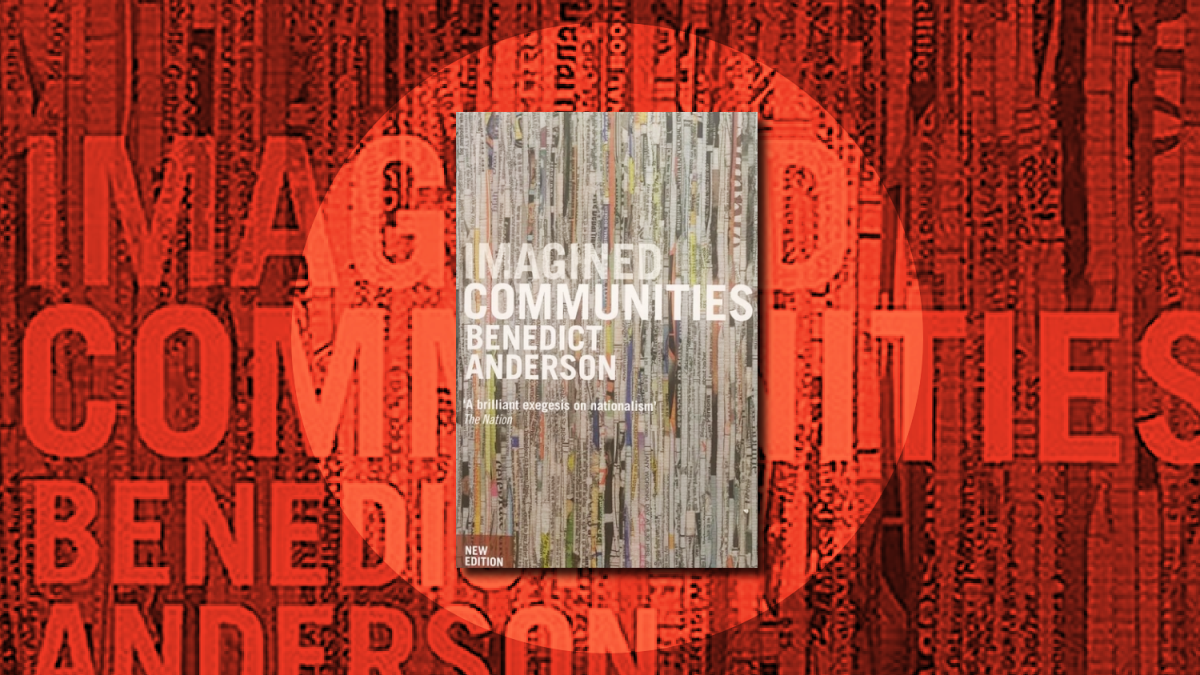
Last Saturday, I attended a lecture at the Women’s Bookstore titled “The Cold War Genealogy of Taiwanese and Korean Feminism”. Professor Chen Pei-Chen from National Chengchi University mentioned Benedict Anderson’s Imagined Communities during the talk. After returning home, I decided to revisit this classic work. Although the content can be challenging for me, it provides profound insights into modern nations, nationalism, and political imagination, making it worth a deeper study.
上週六,我參加了女書店舉辦的一場講座,題為【台韓女性主義的冷戰系譜】。講者是政治大學的陳佩甄教授,講座中她提到班納迪克·安德森的《想像的共同體》。回來後我就重新翻閱這本經典著作。雖然內容對我而言還是有些艱澀,但它對理解現代民族、民族主義,以及政治想像仍能帶來深遠的啟發,因此我認為值得再次深入閱讀。
Author Background and Writing Context
作者背景與寫作緣起
Benedict Anderson, the author, was a scholar with a rich cross-cultural background. Born in Kunming, China, his childhood was marked by repeated “exile” and linguistic estrangement, fostering a lifelong curiosity about the relationship between language and identity. He studied Classics and English-French literature at Cambridge University, laying the foundation for his interdisciplinary research.Anderson’s political awareness emerged from his critique of imperial politics and sympathy for the colonized. Later, he studied Indonesian studies at Cornell University under the guidance of George Kahin, gaining a nuanced understanding of patriotism. The immediate trigger for writing Imagined Communities was the 1978–79 conflicts between China, Vietnam, and Cambodia, which led him to question why socialist states, claiming “internationalism,” could go to war over nationalism.After being exiled by Suharto’s regime, Anderson turned to comparative thinking and explored Indonesian literature, examining the connection between literature and political imagination. Ultimately, he integrated comparative history, historical sociology, textual analysis, and anthropology, producing a work of enduring influence.
本書作者 班納迪克·安德森 Benedict Anderson 是一位深具跨文化背景的學者。他出生於中國昆明,童年經歷了不斷的「流亡」與語言隔閡,這讓他對語言與認同的關係產生了終身的好奇。他早年在劍橋大學學習古典學及英法文學,為日後跨領域的研究奠定基礎。他的政治啟蒙來自對「帝國政治」的批判,以及對「被殖民者」的同情。後來前往康乃爾大學專攻印尼研究,在老師喬治·凱亨 George Kahin 的影響下,體會到愛國主義的正當性與合理性。寫作《想像的共同體》的直接導火線,是1978年至1979年間的中、越、柬戰爭,這讓他質疑:為何標榜「國際主義」的社會主義國家,會因民族主義而相互開戰?之後因為被蘇哈托政權驅逐,他轉向比較性的思考,並透過研讀印尼文學,開始關注文學與政治想像的關聯。最終,他融合比較史、歷史社會學、文本分析與人類學於一爐,完成了這部影響深遠的經典著作。
Core Questions and the Definition of “Nation”
核心問題與「民族」的定義
Anderson raises several central questions in the book:
- What are “nation” and “nationalism”?
- How did they emerge and evolve, and why do they hold such emotional legitimacy today?
He offers an innovative definition: “A nation is an imagined political community — imagined as both inherently limited and sovereign.”It is important to note that “imagined” does not mean fabricated. Rather, it is a cognitive process essential for forming group identity. Nations are therefore a social fact, not mere illusions.
- They are imagined as “limited” because no nation claims to encompass all humanity.
- They are imagined as “sovereign” because nations arose when traditional religious and dynastic legitimacy declined.
- They are imagined as a “community” because, despite class or origin, members perceive a horizontal sense of fellowship.
安德森在本書中提出幾個核心問題:
- 什麼是「民族」(nation)與「民族主義」(nationalism)?
- 它們如何出現、發展,又為何能擁有深刻的情感正當性?
他為「民族」下了一個創新的定義:「民族是一種想像的政治共同體——被想像為本質上有限的,同時也享有主權的共同體。」需要強調的是,這裡的「想像」並非捏造或虛假,而是一種形成群體認同不可或缺的認知過程。因此,民族是一種真實存在的社會事實,而非單純的幻覺。
- 它被想像為「有限的」,因為沒有民族會把自己等同於全人類。
- 它被想像為「主權的」,因為民族誕生於傳統宗教與王朝合法性衰落的歷史背景下。
- 它被想像為「共同體」,因為無論階級、出身,民族內部都存在一種「水平的同志情誼」。
Three Paradoxes of Nations and Their Cultural Construction
民族的三大詭論與文化人造物特性
Anderson identifies three paradoxes faced by theorists of nations:
- Objective Modernity vs. Subjective Antiquity: Nations are historically modern, yet nationalists perceive them as ancient.
- Universality vs. Particularity: The concept of belonging is universal, but its concrete form is particular (e.g., Greek nation).
- Political Power vs. Philosophical Poverty: Nationalism wields great political influence but lacks profound theoretical underpinnings.
He argues that nations and nationalism are cultural artifacts, emerging in the late 18th century through the complex convergence of historical forces. They are “modular,” transferable across societies, and capable of combining with diverse political ideologies.
安德森指出,民族理論家常遇到三大詭論:
- 客觀現代性 vs. 主觀古老性:民族在歷史上是現代的,但在民族主義者眼中卻是古老的。
- 普世性 vs. 特殊性:民族觀念是普世的(每個人都應有民族身分),但具體形式卻是特殊的(如「希臘民族」)。
- 政治力量 vs. 哲學貧乏:民族主義在政治上影響巨大,但在哲學上卻缺乏深刻理論。
他認為,民族與民族主義是一種「文化人造物」。它們在18世紀末由多重歷史力量交會而自發生成,並且具有「模組化」特性,可以被移植到不同社會,與各種政治、意識形態結合。
Historical Conditions for the Emergence of National Consciousness
民族意識誕生的歷史條件
Epistemological Preconditions 認識論上的條件
The emergence of nations is tied to a transformation in human ways of understanding the world. As the dominance of “world religious communities,” dynasties, and prophetic time waned, people could begin imagining secular, horizontal communities.Anderson draws on Benjamin’s concept of “homogeneous, empty time” to describe this new temporal framework. Novels and newspapers provided a technical means to reproduce imagined communities, allowing societies to experience a shared temporal rhythm.
民族的出現,與人類理解世界方式的轉變有關。隨著「世界宗教共同體」、「王朝秩序」及「神諭式時間觀」的衰落,人們開始以新的方式想像社會。安德森借用班雅明 ( Walter Bendix Schönflies Benjamin ) 的「同質的、空洞的時間」概念,來描述這種新的歷史觀。小說與報紙的出現,提供了重現民族共同體的「技術手段」,因為它們的敘事結構模擬了一個社會在同一時間內共同經歷歷史事件的節奏。
Print Capitalism 印刷資本主義
Anderson emphasizes that print capitalism was critical for forming national consciousness:
- It created a communication space above local dialects yet below Latin.
- It standardized language, fixing dialects in print form.
- By distributing texts widely, millions could read the same newspaper or book simultaneously, forming an “anonymous, yet real community.”
此外,印刷資本主義是孕育民族意識的重要條件:
- 它在拉丁文與方言之間建立了新的交流場域。
- 標準化語言,使方言固定化並印刷化。
- 印刷品的廣泛傳播,使數百萬人同時閱讀相同內容,創造出一種「無名的社群」。
Official Nationalism, Patriotism, and Tools of Nation-Building
官方民族主義、愛國主義與建國工具
Official nationalism refers to state-led nation-building efforts, serving ruling elites’ interests, e.g., Russification or Anglicization policies in colonies. These top-down strategies interacted with spontaneous grassroots nationalism.Patriotism is a form of political love, often expressed through kinship or homeland vocabulary, intertwining nation with unchosen characteristics such as race, gender, and origin. This differs from racism, which reduces opponents to biological traits.Colonial tools like censuses, maps, and museums inadvertently shaped nationalist rules by abstracting, territorializing, and secularizing knowledge, imagining opponents before they emerged. Ernest Renan emphasized that nations “must forget many things,” selectively omitting or simplifying historical events to foster cohesion.
官方民族主義是指由上而下、為當權者利益推行的民族建構,例如殖民地的俄羅斯化或英格蘭化政策,這些策略與群眾自發的民族主義相互作用。愛國主義是一種政治之愛,通常以親族或故鄉語彙表達,將民族與不可選擇的特徵例如膚色、性別、出身連結。這不同於種族主義,後者簡化對手為生物性特徵,忽略民族屬性。殖民地政府透過人口調查、地圖、博物館等工具,無意中塑造了日後民族主義的基本規則,甚至在對手出現前就先想像了對手。赫南 ( Ernest Renan ) 指出,民族必須「遺忘很多事情」,選擇性地省略或簡化歷史事件,以增強內部凝聚力。
Conclusion, Impact, and Personal Reflection
結論、影響與個人心得
Imagined Communities does not aim to deconstruct nations but to historicize and relativize them. For Anderson, the core issue of nations is not “true or false,” but understanding. By objectively examining how unique national identities form, one can overcome ethnocentrism and seek peaceful coexistence between different imagined communities.Since its publication in 1983, the book has become a classic in nationalism studies, alongside works by Hobsbawm and Gellner, influencing postcolonial and Southeast Asian studies. It challenges Eurocentric narratives and reminds us that nations are historically constructed rather than naturally given. In today’s globalized world, with migration and identity politics, Anderson’s insights remain highly relevant.Reading this book after attending the lecture on Taiwanese and Korean feminism allowed me to connect Anderson’s ideas about imagined communities with contemporary debates on identity, gender, and transnational solidarity. It highlighted how collective imagination continues to shape our social and political realities, prompting reflection on the communities we belong to and how they are formed.
《想像的共同體》並非旨在解構民族,而是希望歷史化與相對化民族認同。對安德森而言,民族的核心問題不是「真實與虛構」,而是理解。透過客觀理解每個獨特民族認同的形成過程,我們才能超越民族中心主義,追求不同「想像的共同體」之間的和平共存。自1983年出版以來,本書成為民族研究經典,與霍布斯邦、蓋爾納作品並列,並影響後殖民及東南亞研究,挑戰歐洲中心敘事,提醒我們民族並非天經地義,而是歷史建構。在當前全球化、移民潮與認同政治頻繁的背景下,安德森的觀點仍具高度啟發性。在參加台韓女性主義講座後重讀這本書,讓我能將安德森的「想像共同體」概念與當代身份、性別及跨國連帶討論相連結。它提醒我們,集體想像持續塑造社會與政治現實,也促使我們反思自己所屬的共同體,以及它們如何形成。