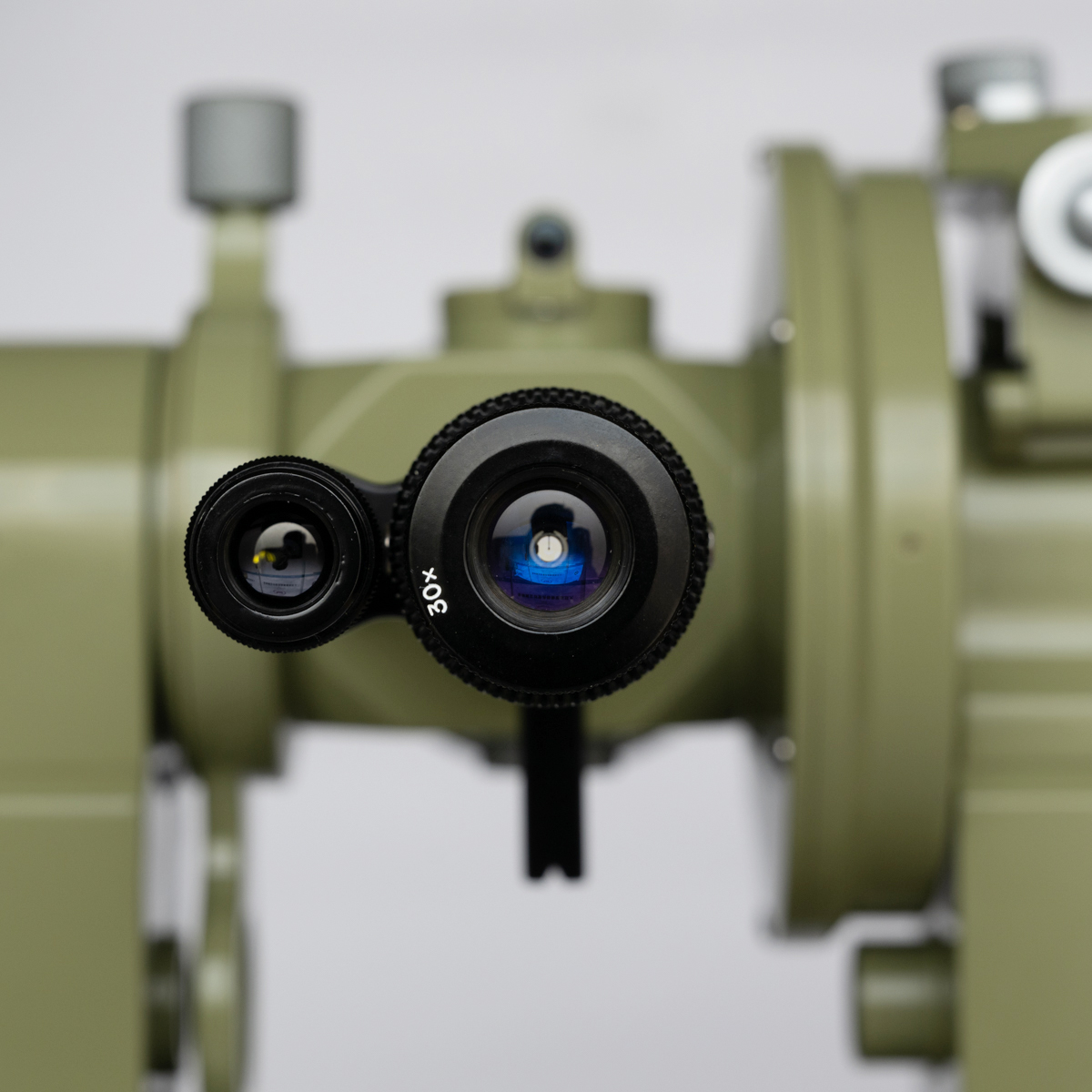
When I stepped into the office today, my boss mysteriously called me over to see his new collection. Based on my past experiences, I thought it would just be some old junk—nothing exciting. But to my surprise, I saw something truly amazing! It was a WILD T2 theodolite, preserved in near-perfect condition. The smooth metal body showed almost no signs of rust or wear from age. The scales were clear, and the knobs turned smoothly. It was my first time seeing an old instrument in such excellent condition.
In the early 20th century, European empires were at their peak. For these colonial powers, the precision of a theodolite often meant gaining a few extra miles of land during border negotiations or finding the exact location of a mining site. The advancement of surveying technology became an “invisible tool” for these empires to expand their territories.
Although Switzerland was politically neutral, it became a leader in technical innovation during that time. In 1921, Wild Heerbrugg Ltd. was founded in the small Swiss town of Heerbrugg. The founder, Heinrich Wild, was a brilliant engineer who had also worked at the famous German company ZEISS, developing leveling instruments. Wild’s first theodolite, the T1, was a technological marvel of its time. Compared to traditional instruments, the T1 was lightweight and highly accurate, quickly finding its place in colonial development and infrastructure projects. Building on the T1, Wild Heerbrugg introduced an improved, more precise model—the T2 theodolite.
Compared to the T1, the T2 was even more advanced. Its optical system and structural design were optimized to the highest standards. The T2 was widely used in major European infrastructure projects, such as roads, railways, and waterworks, contributing greatly to post-war reconstruction and development. For emerging nations, the T2 became a symbol of modernization. Its footprints can be found all over the world. In a way, it played a part in and witnessed a history of land, power, and technology.
Today, the T2 has been replaced by newer, more advanced instruments. Wild Heerbrugg merged with other brands and eventually became what we now know as Leica Geosystems. Still, many older engineers actively seek to collect this iconic instrument. I took this opportunity to snap a few photos of it—let’s take a look together!