Noble Blood and Childhood: The Different Habsburg Prince
Wilhelm Franz von Habsburg-Lothringen was born on February 10, 1895, in Pula, Croatia. This city was an important naval base for the Austro-Hungarian Empire. His family belonged to the Habsburg-Lorraine dynasty, rulers of the empire. His father, Archduke Karl Stephan, was an Austrian naval commander who loved Polish culture. He taught his children Polish and wanted them to become leaders in Poland.
Wilhelm grew up in a royal palace, learned many languages like German, French, Polish, Italian, and Ukrainian. His father hoped Wilhelm’s brothers would rule Poland, but Wilhelm became interested in Ukraine instead.
Falling in Love with Ukraine: The Nobleman with a Cossack Soul
In 1907, 12-year-old Wilhelm went to Galicia (now part of Poland and Ukraine), ruled by Austria-Hungary. There, he studied at a military school and discovered Ukrainian culture. He learned Ukrainian and admired the Cossacks – famous warrior horsemen who fought for freedom.
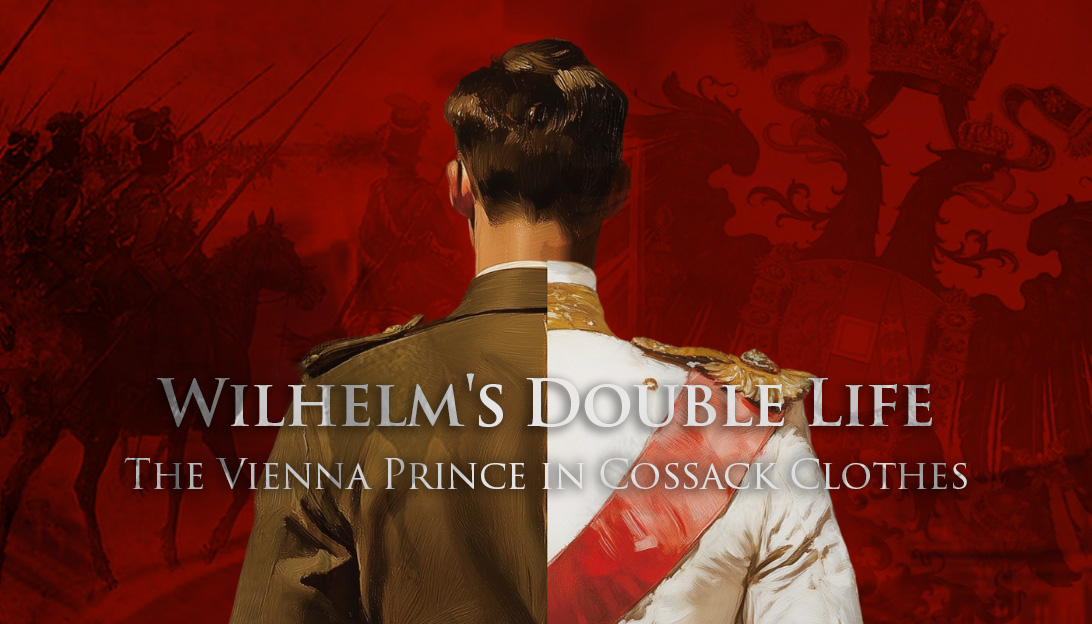
His father wanted him to be king of Poland, but Wilhelm dreamed of Ukraine’s independence. He wore Cossack clothes and believed Ukraine should be free from Russia, Poland, or Austria. This made him very unusual in the Habsburg family.
World War I: The Start of a Ukrainian Dream
When World War I began in 1914, 19-year-old Wilhelm joined the Austrian army’s Ukrainian Legion. This group wanted Ukraine to become independent after the war.
Because he spoke Ukrainian well and respected local traditions, soldiers called him “Prince Vasyl Vyshyvanyi.” He encouraged Ukrainian soldiers to fight for their own country, not just for Austria or Russia. But the war ended with the collapse of empires.
The Fall of the Empire and a Failed Kingdom
By 1918, Austria-Hungary was losing the war. Different groups fought for independence. Wilhelm went to Ukraine, trying to create a kingdom supported by the Habsburgs. He worked with Ukrainian leaders but failed.
In 1919, Ukraine was in chaos. Polish troops, Soviet soldiers, and local warlords fought each other. Wilhelm’s army lost, and his dream of becoming Ukraine’s king ended. He escaped to Austria as a homeless noble.
Exile and World War I Shadows
From 1920 to 1930, Wilhelm lived in Paris, Rome, and Madrid. He wrote books and worked as a military advisor but still hoped to help Ukraine.
During World War I, he talked to Nazi officials, thinking they might support Ukrainian independence. But the Nazis wanted to control Ukraine, not free it. Wilhelm later left the Nazis.
Soviet Prison: The End of a Habsburg
After World War II, Austria was under Soviet control. In 1947, Soviet agents arrested Wilhelm in Vienna, calling him a “Western spy.” They sent him to a prison in Kyiv (Ukraine’s capital).
He suffered in prison and died in 1948 at age 45. His body was secretly buried and never found. His death marked the end of the last Habsburg prince who tried to build a kingdom in Eastern Europe.
Legacy: A Forgotten Story
Wilhelm’s life shows the chaos of Eastern Europe in the 1900s. He was an Austrian prince who became a Ukrainian nationalist. Though he failed, some Ukrainians today remember him as “their prince.” His story remains a forgotten part of Habsburg history.
For those curious about this complex character, Timothy Snyder’s related book is strongly recommended.