Last week, U.S. President Trump suddenly announced plans to impose tariffs on imported goods from over 130 countries. This policy not only caused turbulence in global markets but also made me think about how globalization actually began. From the explorers of the Age of Discovery who opened up transoceanic trade to the global strategies of modern multinational corporations, through this article, we will review the origins of globalization and explore how it continues to shape our lives in today’s world.
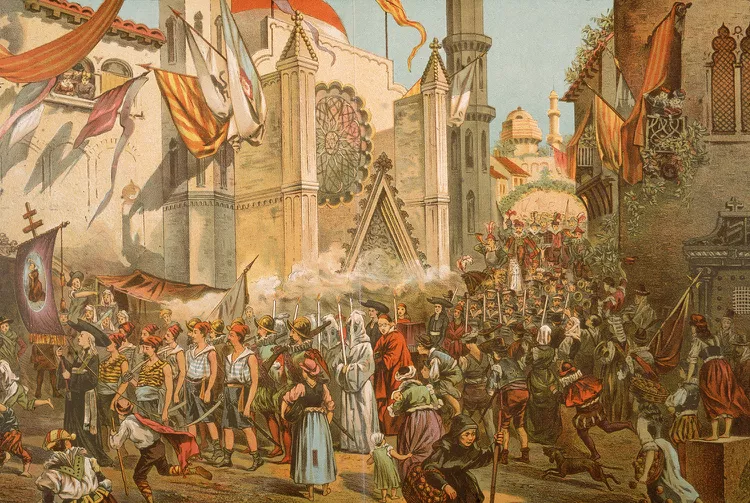
In 1492, Columbus set sail from Spain with three small ships, trying to find a new route to Asia. He didn’t know that this journey would not only change the world map but also start the beginning of globalization. Explorers like Columbus and Magellan connected the trade networks of Europe, America, and Asia, bringing an unprecedented flow of goods and cultural exchange. Spain brought gold back from the Americas, while Chinese silk and porcelain became luxury items for European nobles. These goods not only changed people’s lives but also made the world smaller and more connected. During this time, globalization began to take shape, as trade routes allowed different civilizations to interact and influence each other in terms of economy, culture, and technology.
With the arrival of the Industrial Revolution, globalization accelerated further. British steamships and railways made the flow of goods and culture faster and more efficient. Indian tea became a daily drink for the British, while British industrial products dominated global markets. During this period, the wave of globalization seemed unstoppable, as economies and cultures of different countries became interdependent, forming a tightly connected network. However, globalization was not without challenges. It brought prosperity but also caused new problems. For example, resources from colonies were heavily exploited, and local economies and cultures were impacted. These issues laid the foundation for later anti-globalization movements.
In the 21st century, U.S. tariff policies have made the path of globalization more complicated. If the Age of Exploration opened the “door” to globalization, these policies are like trying to adjust how wide that door opens. American farmers face challenges due to trade conflicts, while ordinary consumers notice price changes in imported goods. These changes have made people start to think: Is globalization as irreversible as we once believed? Or is it just a road that needs constant adjustment? Additionally, tariff policies have led to a reorganization of global supply chains. Many companies are moving their production bases to regions with lower costs, further changing the global economic landscape.
Globalization has made the world smaller and life richer. But when tariff policies rebuild trade barriers, are we witnessing a turning point in history? Or is this just an adjustment on the path of globalization? History tells us that the forces of globalization and anti-globalization have always been in conflict, and the result of this conflict will deeply affect our future world. No matter what, globalization has become an undeniable part of modern society. It brings both opportunities and challenges. Finding a balance between globalization and anti-globalization will be a task that all countries need to face together in the future.
Globalization and Anti-Globalization – From the Age of Exploration to Tariff Policies