When people hear about Sasebo in Nagasaki, their first thoughts are usually of its coastal scenery and the US military base. Yet the city’s history encompasses more than just military development—it reflects a complex tapestry of local life, where residents coexisted with foreign cultures, blending with them while also navigating tensions.
提到長崎縣的佐世保,多數人會先聯想到濱海風景與美軍基地。然而,這座城市的歷史,不僅是一段軍事發展的縮影,也是一部居民與異文化共處、融合與拉扯的生活長卷。
From Fishing Village to the Empire’s Heartbeat
從小漁村到帝國艦隊的心臟
Sasebo was merely a small fishing village until the Meiji era. When the government decided to strengthen its navy by emulating Western powers, Sasebo’s deep natural harbor and strategic location facing Korea and China’s eastern coast made it the ideal choice for the Sasebo Naval District—one of the Imperial Navy’s four key bases.
佐世保原本只是一個小漁村,直到明治時期,日本政府決心強化海軍實力、模仿西方列強的軍事體系時,佐世保因其優良天然港灣、面向朝鮮半島與中國東岸的戰略位置,被選定為「佐世保鎮守府」所在地,也就是帝國海軍四大基地之一。
Before its military transformation, Sasebo was an obscure coastal village north of Nagasaki, nestled between mountains and sea with sparse population. In 1886, the Imperial Navy sought a new port in northern Kyushu, and Sasebo’s terrain—a sheltered harbor backed by hills—secured its selection. By 1889, the Meiji government officially designated Sasebo as a naval stronghold. Land reclamation projects expanded the harbor, cementing its status among Japan’s “Big Four” naval bases alongside Yokosuka, Kure, and Maizuru. The city grew into a military-industrial hub, spurring shipbuilding, steel, and machinery industries. From late Meiji to Taishō periods, its radial urban layout—with docks as the centerpiece—shaped naval barracks, dockside hospitals, and the still-standing Sasebo Station and Yonkachō shopping district.
在成為帝國海軍重鎮以前,佐世保只是長崎北方一個平凡的港灣漁村,依山傍海、人口稀少。1886年,日本帝國海軍決定在九州北部建設新軍港,佐世保因其天然良港地形、背山面海的戰略位置而被選中。1889年,明治政府將佐世保指定為海軍重鎮,設立「佐世保鎮守府」,開始大規模填海造港,成為日本四大海軍基地之一(與橫須賀、吳、舞鶴並列)。佐世保逐漸發展成為一座軍事主導的港市,也帶動造船業、鋼鐵、機械等工業興起。明治末至大正年間,城市街道、官舍、造船廠、醫院等多半為軍事服務設計,市區呈「放射狀擴張」,以港灣為中心延伸街道與設施,如今佐世保站與「四ヶ町商店街」即是當年規劃核心。
Yet prosperity came with devastation. By WWII’s end, Sasebo’s critical role in supplying Pacific campaigns—with extensive shipyards and repair docks—made it a prime target for US bombing raids.
但繁榮的另一面是重創。二戰末期,佐世保已是太平洋戰線的兵力與物資重要輸出基地,擁有強大的軍事設施與艦艇維修能力,也因此成為美軍空襲目標之一。城市大片地區在1945年3月與6月的空襲中化為焦土。戰爭結束後,美軍迅速進駐,在此設立基地,而佐世保也展開了另一段矛盾交錯的重建之路。
Occupation and Rebirth: Defeat, GIs, and Mixed-Race Children
被接管與重生之地:戰敗、駐軍與混血兒
When Japan surrendered unconditionally in August 1945, US forces took control of Sasebo’s docks and urban infrastructure, transforming it into a key naval hub. Postwar Sasebo—once a crown jewel of the Imperial Navy—saw its shipyards dismantled and workers jobless. The city teetered on collapse. The US fleet’s arrival revived the port with “special procurement” jobs. Locals soon learned: mastering phrases like “sunny-side up” mattered more than mourning lost glory. Base jobs—as cleaners, cooks, or drivers—became lifelines for families. This contact spawned a pidgin “base English,” blending kitchen slang and military terms. Elders recall: “Back then, basic English and obedience meant steady pay.” Interviewees noted GIs’ politeness and candy-giving—a stark contrast to wartime bomber images. Yet parents whispered: “Never forget they’re occupiers.” Such ambivalence lingers in elders’ memories. Mixed-race children born to GIs and local women faced harsh stigma in 1950s Japan. Mothers were branded as “base women” or morally corrupt “GI girls.” Many children ended up in church-run orphanages, enduring bullying as “Amerasian half-breeds.”
1945年8月日本無條件投降,美軍進入佐世保,接收整個港區與部分城市設施,這裡成為美軍艦隊的重要據點之一。戰後的日本百廢待舉,佐世保這座曾為帝國海軍四大軍港之一的城市,舊軍事設施遭拆解、船塢荒廢、工人失業,城市一度幾近癱瘓。原本以軍工為主要命脈的地方產業失去了依靠。艦隊進駐重新啟動了這座港口,也帶來了大量特需經濟需求。城市接納了駐日美軍的經濟援助與工作機會,佐世保人很快理解了一個現實:與其哀悼舊軍港的沒落,不如學會說幾句英文、煎出一顆煎蛋。許多當地居民進入基地工作,像是清潔人員、餐廳廚師、翻譯、司機等,很多家庭因為能進入基地工作而重新站穩腳步。因此,經濟現實壓過了民族情緒,即使有人心中不滿,也會為了家庭生計選擇忍耐或轉為合作。這些與美軍直接接觸的職位不僅提供穩定收入,也促成了某種程度的文化交流,甚至有些人家的長輩會說「基地英語」,特別是餐飲用語或軍事簡語。許多佐世保的中老年人口都有這樣的記憶:「那年代只要會說一點英語、懂得守規矩,就能在基地裡賺穩錢。」許多接受訪問的當地居民都強調:美軍士兵普遍有禮貌,喜歡小孩,喜歡送糖果,這與戰爭末期日本被轟炸時人們對美軍的恐懼形成反差。有些孩子甚至習慣在美軍卡車經過時追著跑,只為了拿一顆泡泡糖。但也有父母會私下告誡:「我們還是要記得那是占領軍。」這種表面友好、內心矛盾的心情,是當地許多老一輩人難以用語言形容的混合記憶,但這並不全是溫和的故事。
Mixed-race children born to GIs and local women faced harsh stigma in 1950s Japan. Mothers were branded as “base women” or morally corrupt “GI girls.” Many children ended up in church-run orphanages, enduring bullying as “Amerasian half-breeds.”
戰後,許多美日混血兒出生於佐世保,其中不少是美軍與當地女性的後代。但在當時的日本社會,未婚生子、異國血統都極難被接受。一些女性被標籤為「基地婦女」「GI girl」,甚至被視為道德敗壞的象徵,這種性別與階級交織的偏見持續多年。很多母親遭家族放棄、孩子進入教會經營的混血孤兒院。這些孩子在日本社會中往往面臨歧視與邊緣化,在學校常常被欺負,叫做「アメコ」或「ハーフのくせに」。
Recent years, Japanese society has begun to confront the history of the “mixed-race generation” (konketsuji or hāfu), with NHK, local newspapers, and documentaries shedding light on their struggles with identity and quests to find absent parents. Some second-generation mixed-race individuals (now aged 50–70) have formed advocacy groups and organized oral history workshops.
近年日本社會對「半混血世代」的歷史逐漸產生關注,NHK、地方報紙與紀錄片曾製作相關報導,講述混血兒的身分焦慮與找尋親人的歷程。有些混血兒二代(現約50~70歲)開設協會、舉辦回憶講座。
A Tokyo-based mixed-race woman shared this poignant reflection:
“In childhood, I was ‘an American soldier’s daughter’; in adolescence, ‘Japan’s shame.’ Only in old age did I learn to say: This is my history—not my sin.”一位現居東京的混血兒表示:
「我童年是美國人的女兒,青春期是日本人的恥辱。到了老年,我才學會說:這是我的歷史,不是我的錯。」
Even today, elders whisper of this suppressed past—unrecognized families, stateless childhoods—now a deliberately folded page in Sasebo’s historical record.
今日仍可聽見部分長者談起這段被掩蓋的過去,那些沒能被承認的家庭、沒有國籍的童年,成為佐世保歷史的一頁暗角。
Curry & Hamburgers: A Naval Port’s Flavor Legacy
咖哩與漢堡:軍港的味覺記憶
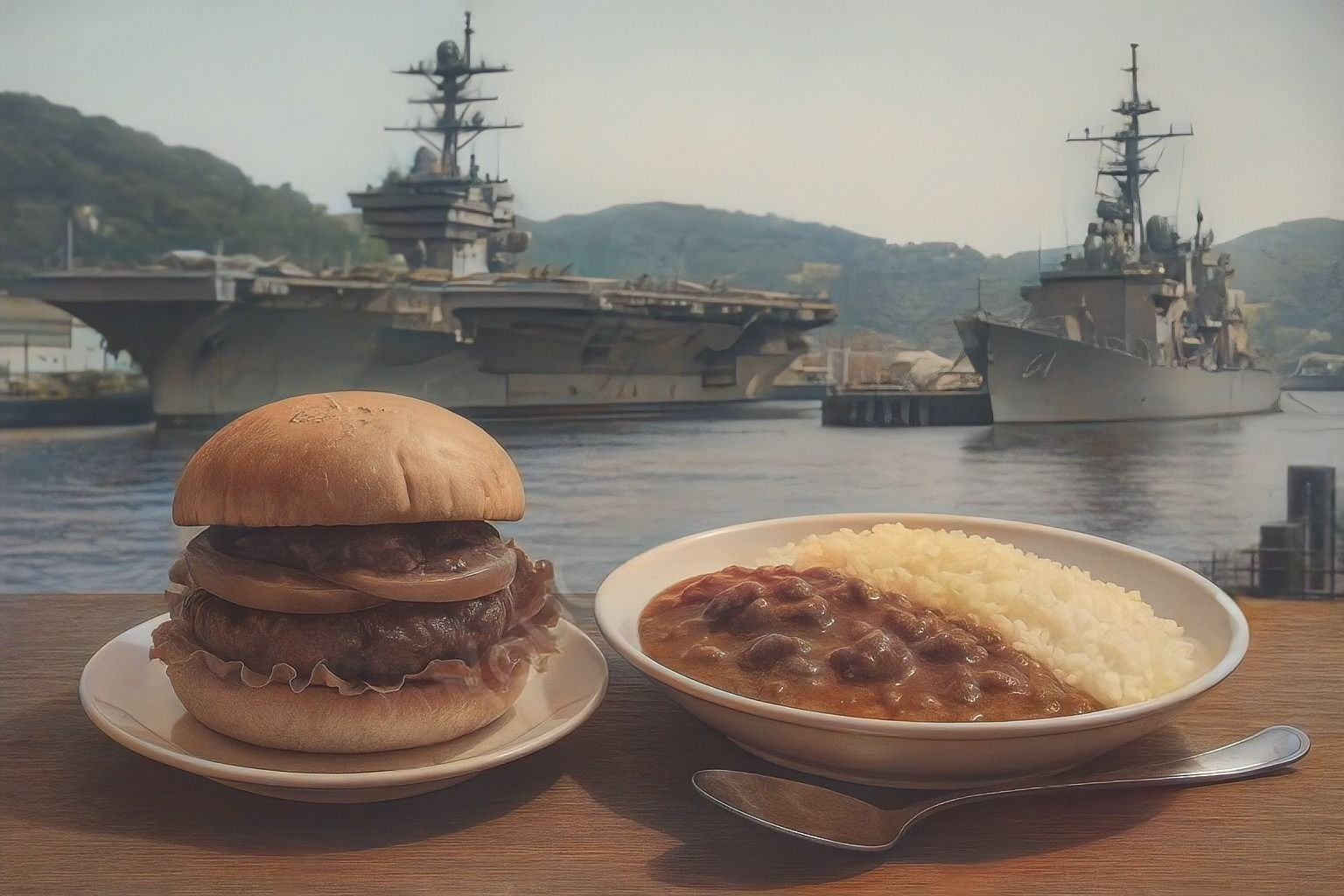
Just as Dejima served as Edo Japan’s window to the world, Sasebo’s dining tables became postwar Japan’s stage for cultural friction, fusion, and reinvention between Japanese and American influences. Today, no visitor leaves Sasebo without tasting its two iconic dishes: Navy Curry and Sasebo Burgers—both born from military history.
正如同出島是江戶時代對世界敞開的窗口,佐世保的餐桌,則是戰後日本與美國文化摩擦、融合、再生的現場。當今遊客到佐世保,幾乎不可能錯過兩樣著名美食:海軍咖哩與佐世保漢堡。這兩者也源自軍事背景。
Navy Curry
海軍咖哩
Curry rice originated from the British Royal Navy’s innovative “shipboard ration management” system—a meticulously calculated dietary regimen. During long voyages, where nutritional imbalance and the blurring of day and night at sea disrupted time perception, the British military would serve this thick stew of vegetables, meat, and spices fried with flour, paired with steamed rice, on designated weekly days. Not only was it nutritious and easy to mass-produce, but its robust aroma also masked the taste of poorly preserved ingredients, leading to its rapid adoption across fleets. During the Meiji era, as Japan’s navy modernized by emulating the British, it adopted this culinary practice. Curry rice was standardized on a fixed weekly day (typically Friday) as a high-nutrition meal, turning “Friday Curry” into the Japanese navy’s de facto spice clock. Even today, the Maritime Self-Defense Force maintains the tradition, with each vessel periodically serving curry—some even developing ship-specific recipes. This spurred regional promotions—former naval district cities like Yokosuka, Maizuru, and Sasebo each developed their own navy curry styles. Unlike Yokosuka’s or Maizuru’s variations, Sasebo’s curry emphasizes faithful recreations of shipboard recipes. The city even has a “Warship Curry Certification System,” where restaurants must meet Maritime Self-Defense Force standards to name dishes after vessels (e.g., “Minesweeper Hatsushima Curry” or “Escort Ship Kirishima Curry”). Distinct from Tokyo’s sweet curry or Osaka’s spicy versions, Sasebo’s curry is defined by its balance. Meat and onions are slow-cooked until the sauce achieves a deep brown hue, subtly sweet with a peppery finish. It’s almost always served with salad and milk (standard Self-Defense Force fare), plus a small dessert—replicating the exact meal format aboard ships. Some restaurants even include replica navy menus, letting diners experience “eating like a sailor.”
咖哩飯始於英國皇家海軍先進的「船艦糧食管理」概念,是精密計算後的飲食制度。長時間航行中,由於飲食營養不均且海上日夜難分、易失去時間感,英軍會在每週特定的日子供應這道以蔬菜、肉類、香料搭配麵粉炒成的濃稠湯汁,搭配主食白飯的料理。這道料理不僅營養、方便大量製作,更能透過其濃烈香氣掩蓋食材保存不良的味道,迅速在艦上推廣普及。明治時期,日本海軍仿效英國建立現代化海軍時,也學習了這個供餐方式。在每週某天(通常是週五)統一供應高營養的咖哩飯,因此「金曜咖哩」就成了日本海軍約定俗成的的香料時鐘。即使到了現代海上自衛隊,每艘艦艇仍會定期供應咖哩,甚至會研發各艦專屬食譜。這也帶動了地方推廣活動——包括橫須賀、舞鶴與佐世保等前鎮守府城市,都推出各自風格的海軍咖哩。與橫須賀、舞鶴的咖哩相比,佐世保咖哩強調復刻艦艇配方,市區內甚至有「艦艇咖哩認證制度」,每間餐廳要通過海上自衛隊標準,才能命名如「掃雷艇はつしま咖哩」「護衛艦きりしま咖哩」這樣的艦名咖哩。有別於東京的甜咖哩或大阪的濃辣系,佐世保咖哩最大的特色在於平衡。它通常使用肉類與洋蔥長時間炒製,湯汁帶有深褐色澤,略甜而後辣,並且幾乎總會搭配沙拉與牛奶(自衛隊標配),以及一塊小甜點作為收尾,忠實重現軍艦上的供餐形式。有些餐廳還會附上海軍食譜複製品,讓食客體驗「像士兵一樣用餐」的感覺。
Sasebo Burgers
佐世保漢堡
As for burgers, they represent the gradual assimilation of garrison-introduced fast food into local eateries. Unlike navy curry—a Meiji-era military tradition—Sasebo burgers emerged as a postwar grassroots classic. The U.S. forces brought not only warships, trucks, and dollars, but also culinary cravings. What they longed for wasn’t sushi or ramen, but homestyle beef patties. In those days, Sasebo faced shortages and urban chaos, but a handful near the docks sensed opportunity. They were grocers, laundresses for GIs, club workers—and local mothers who’d learned to sear steaks on base. With scrap ingredients and hazy memories, they began recreating that foreign food—meat tucked in round buns—on street carts. To locals, burgers weren’t just Western fare, but childhood staples. Many elders had worked in GI bars, picked up English at PX stores, or cooked for military families. For them, burgers evoke not alienation, but a bittersweet nostalgia. Within this context, Sasebo burgers prioritize artisanal touch and regional flair over Yokosuka’s meticulous American replicas. Since the 1990s, the city’s “Sasebo Burger” certification mandates made-to-order patties (no pre-cooking) and local ingredients—forging distinct house styles. Some feature soft-boiled eggs; others add spicy mayo or teriyaki glaze; the iconic “ebi burger” packs fried shrimp. Each shop guards its “only-here” recipe—a culinary alchemy where occupation and cultural seepage became hometown pride.
至於漢堡則是駐軍帶來的速食文化逐漸融入當地餐廳。比起海軍咖哩是始於明治時代的海軍傳統,佐世保漢堡更像是戰後交流下的庶民經典。進駐的美軍不只帶來了軍艦、卡車與美元,也帶來了口味與習慣。他們想吃的不是壽司、拉麵,而是家鄉的牛肉漢堡。當時的佐世保,物資短缺、市井混亂,但在港邊有一小群人嗅到了新機會。他們多半是開雜貨店的、幫美軍洗衣服的、在俱樂部打工的,也有些是在基地裡學會煎牛排的當地的媽媽們。他們用手邊可得的材料、憑著模糊記憶與觀察,開始在街角攤車上試著重現那個圓圓的麵包裡夾牛肉的異國食物。對很多佐世保市民來說,漢堡不只是西洋食物,更是從小吃到大的熟悉味道。許多當地的阿公阿嬤,年輕時可能在美軍酒吧打工、在軍人福利社裡學會英文,也可能曾在某個軍人家庭當廚工。人們對漢堡並不感到疏離,反而懷有某種既親切又複雜的記憶。在這樣的脈絡下,佐世保漢堡與橫須賀的復刻美式漢堡相比更重視手作感與地方風味。90年代開始,市府與商圈開始推廣「佐世保漢堡」品牌,要求店家必須現點現做不能預煎,並使用本地食材打造各自特色。有的漢堡夾入半熟蛋、有的加了特製辣味美乃滋、日式照燒醬,還有特別的炸蝦漢堡,每一間都講求「這家才有」的專屬口味。這些變體不只是創意,更像是一座城市如何將「被佔領」與「文化滲透」轉化為在地認同的過程。
The Military Port and Its People: Coexistence Amid Tension
軍港與民家的交織:生活中的矛盾與依存
Unlike Okinawa’s persistent anti-base sentiment, Sasebo’s relationship with the U.S. military is nuanced and multilayered. For many locals, the base was not just an engine of postwar recovery but a lifeline—providing steady jobs in port logistics, construction, food service, translation, and security. Over decades, friendships and trust blossomed between residents and service members, some culminating in marriages. Base open-house days turned into cultural festivals where children high-fived soldiers in parades, sparking dreams of English fluency and overseas adventures. Yet this coexistence was never simple acceptance. Post-1970s, as the Vietnam War escalated, Sasebo saw fierce protests against U.S. carriers and nuclear submarines—especially when their arrivals were undisclosed. Students, fishermen, and activists flooded streets, chanting “No war port in Sasebo!” over environmental and safety fears. These movements mirrored not just pacifist ideals but also local frustration with Tokyo’s unilateral military decisions—a tension between survival and sovereignty.
不同於沖繩社會長年對駐日美軍的強烈對立情緒,佐世保市民與美軍基地之間的關係顯得更為複雜且多層次。對許多佐世保人而言,基地不僅是戰後復興的重要動力,更是家庭生計的依靠——從港口物流、建築維修,到餐飲、翻譯與保全等各種工作,形成穩定的就業機會。數十年來,不少當地人與駐軍成員建立起友誼與信任,有些更因婚姻而結為親屬。基地開放日成為市民親近異國文化、攜家出遊的節慶,孩童在遊行與嘉年華中與美軍士兵擊掌、合照,甚至啟發了對英語與海外生活的憧憬。然而,這樣的互動從來不是單一面向的歡迎或排斥。1970年代以後,隨著越戰升溫與國際反戰聲浪興起,佐世保也曾多次爆發抗議美軍航母與核潛艇靠港的激烈運動。特別是美軍在未事先公開的情況下進行含核艦艇停泊時,引發市民對環境與生命安全的強烈擔憂,學生、漁民與市民團體紛紛走上街頭,高喊「佐世保不做戰爭港口」的口號。這些抗爭,既反映了市民對和平主義的認同,也揭示了地方對中央政府在基地政策上缺乏話語權的深層不滿。
In the 21st century, the U.S. military adjusted its strategy in Japan, prioritizing local community engagement as a means to improve its public image and strengthen alliance foundations. The Sasebo Naval Base adopted a model of “community involvement” and “cultural exchange”: opening facilities for public tours, assisting in local disaster relief efforts, and organizing language and music events… adding a layer of human warmth to the otherwise rigid military presence. Some local high schools even established English camps in collaboration with U.S. troops, nurturing a younger generation with cross-cultural understanding. Yet, the base’s existence remains an undeniable social divide. To some, it symbolizes Cold War remnants and modern colonialism; to others, it is pragmatically accepted as an integral part of the local economy. For the residents of Sasebo, their relationship with the base is not a binary choice of acceptance or resistance, but rather a daily negotiation and balance—finding ways to thrive amid opportunities and pressures, continuously adapting to cultural differences while coexisting in a shared reality.
進入二十一世紀後,美軍駐日策略調整,加強與地方社區的交流,被視為改善駐地形象與穩固同盟基礎的方式。佐世保基地亦轉向「社區參與」與「文化交流」的模式:開放設施參觀、支援地方災害救助、舉辦語言與音樂活動……讓軍服背後的形象多了一份人情與親切。某些地方高中甚至開設與美軍合作的英語營隊,培育跨文化理解的年輕世代。即便如此,基地的存在依然是一個不容忽視的社會分界。有些人將基地視為冷戰遺緒、現代殖民的象徵;而另一些人則以務實的態度,接受它作為城市經濟的一環。對佐世保居民而言,與基地的關係並非接受或抗拒的二分,更像是一種日常的協商與平衡:在機會與壓力之間尋找生存之道,在文化差異與共處現實之間,持續調整姿態。
In Sasebo, history is not a cold collection of facts, but something woven into the flavors of its food, the lines of its architecture, and the rhythm of daily life. Here, there are no clear boundaries—only the traces of generations learning to navigate existence between warships and curry. Perhaps what we call the “postwar era” was never an end, but rather the beginning of another form of coexistence.
在佐世保,歷史不是冷冰冰的資料,而是滲透進食物、建築與生活的節奏裡。這裡沒有明確的界線,只有一代代人在軍艦與咖哩之間摸索如何生活的足跡。也許所謂的「戰後」並不是結束,而是另一種共存的開始。