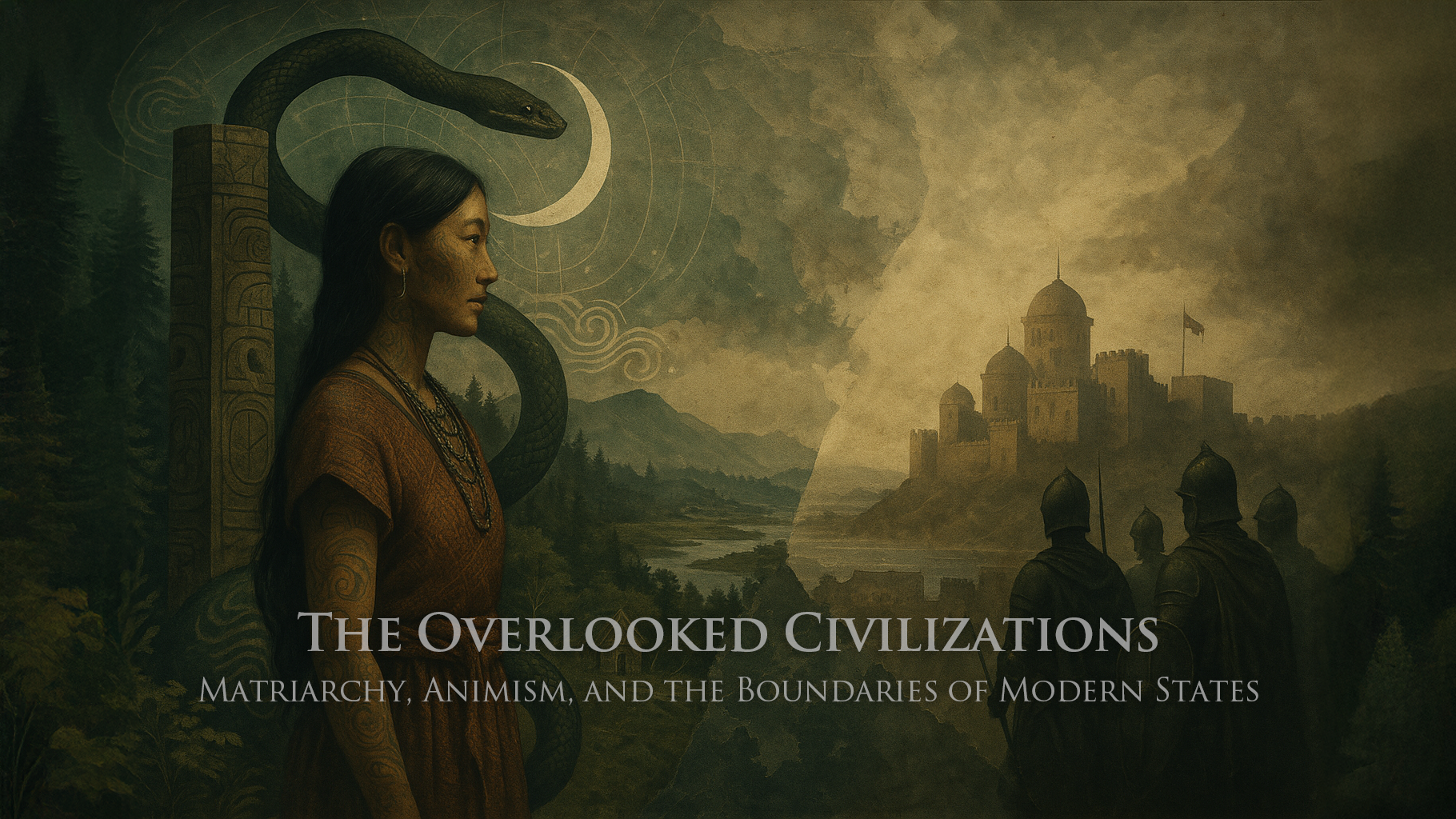
Throughout the long flow of history, human social forms have been incredibly diverse. The ancient tribes, matriarchal communities, and beliefs resonating with nature were not merely transitional stages leading to modern states. Instead, they showcased another possible relationship between humans and their environment, as well as among themselves. The state system, patriarchal structures, and technological civilization that we are familiar with today are not the only evolutionary directions for human society; they are choices shaped by path dependency.
在歷史的漫長流轉中,人類的社會形態曾無比多元。遠古的部落、母系的社群、與自然萬物共鳴的信仰,並非只是過渡到現代國家的前階段,也展現了人類與環境、彼此之間可能存在的另一種關係。當今我們所熟知的國家體系、父權結構與科技文明,可能不是人類社會唯一的進化方向,比較像是一種路徑依賴下的選擇。
The Worldview of Animism
萬物有靈的世界觀
The fundamental concept of animism is that “spirits” exist within all elements of nature. Mountains, rivers, animals, stones, and even the relationships between humans and ancestors can communicate with each other, maintaining the balance and cohabitation of the universe. This belief often coexists with decentralized and egalitarian social structures. In such a world, there are no absolute truths or singular authorities. Humans are a part of nature, not its rulers. This also leads these cultures to favor small-scale self-governance, negotiation, and rotation of leadership rather than centralization of power.
泛靈信仰的基本觀念,是「靈」存在於自然萬物之中。山川、動物、石頭與氣候,甚至人與祖先之間,都能彼此溝通,維持宇宙的平衡與共生。這種信仰往往與去中心化、去等級的社會結構共存。在這樣的世界裡,沒有絕對真理與唯一權威。人是自然的一環而非主宰。這也使得這些文化在治理上傾向小型自治、協商與輪替,而非中央集權。
In many societies with animistic beliefs, totems and body markings become one of the ways to communicate with nature. Tattoos not only symbolize clans and identity but are also often seen as containers of spiritual power, carrying blessings and strength from ancestral spirits and nature deities. This concept leaves symbolic marks such as webs, snake patterns, water waves, and plants on tattoos. The ritualistic nature of tattoos is often closely related to rites of passage, witchcraft, or ancestral inheritance, making them a part of belief systems and social structures.
在許多泛靈信仰的社會中,圖騰與身體標記成為與自然溝通的方式之一。刺青不僅象徵氏族與身分,也常被視為靈力的容器,承載來自祖靈與自然神祇的庇佑與力量。這種觀念在刺青上留下了蛛網、蛇紋、水波與植物等象徵符號。刺青的儀式性也往往與成長、巫術或祖靈傳承等儀典密切相關,是信仰的一部分,也是社會結構的一部分。
The Interweaving of Animistic Culture and Matriarchal Societies
泛靈文化與母系社會的交織
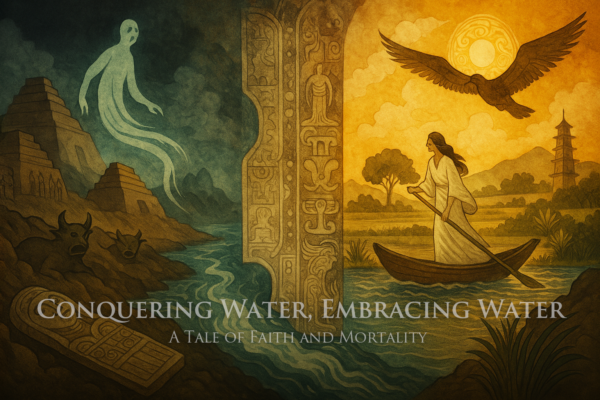
In these cultures that emphasize water, snakes, and ancestral spirits, we also see more matriarchal societies or social forms where women hold relatively high status. The Ba Yue culture in Southeast Asia, the Austronesian peoples, and even the ancient Miao and Yao tribes in the Yunnan-Guizhou Plateau all exhibit values that respect women, fertility, and ancestral lineage. Far to the north in Europe, the Scandinavian region during the Viking Age also showed similar tendencies—women could own property, divorce, and even participate in seafaring and warfare. Their animistic beliefs were deeply rooted in the worship of nature and ancestral spirits, reflecting another social form closely connected to nature and life.
在這些重視水、蛇與祖靈的文化中,我們也較常見母系社會,或是女性擁有相對較高地位的社會形式。東南亞的百越文化、南島民族、乃至古代的苗瑤與雲貴高原諸族,皆呈現出相對尊重女性、生育與祖先血脈的價值觀。遠在歐洲北方的斯堪地那維亞地區,維京時期的社會亦展現出類似傾向——女性可擁有財產、離婚,甚至參與航海與戰爭,其泛靈信仰亦深植於自然與祖靈的崇拜之中,顯示出另一種與自然與生命緊密連結的社會形態。
This is not coincidental. In animistic beliefs, women are often seen as being closer to nature, life, and the universe. They are not only creators of life but often serve as shamans, priests, and maintainers of community spirit. When a society’s primary tasks are survival and stability, rather than expansion and conquest, the role of women is not restricted but central.
這並非偶然。在泛靈信仰中,女性常被視為與自然、生命與宇宙更接近的存在。她們不僅是生命的創造者,也往往是巫師、祭司、族群精神的維繫者。當社會的首要任務是生存與穩定,而非擴張與征服時,女性的角色就不是被限制的,而是中心。
Conversely, in monotheistic or feudal societies that emphasize military, control, and expansion, women’s status begins to shrink. In these systems, stable patriarchal lineages, controllable family structures, and the ideology of a “single truth” combine to strictly regulate women’s bodies and actions.
相對地,在強調軍事、控制與擴張的一神論或封建社會中,女性的地位開始被壓縮。在這些系統中,穩定的父權血統、可被控制的家庭制度、與「單一真理」的意識形態結合,讓女性的身體與行動受到嚴格規訓。
Monotheism, Feudalism, and the Rewriting of Women’s Roles
一神論、封建制度與女性角色的改寫
Taking China as an Example: Confucian thought, through the interpretations of Dong Zhongshu in the Western Han dynasty and later scholars of the Song and Ming dynasties such as Zhu Xi, increasingly defined women as submissive beings. Systems like the Three Cardinal Guides and Five Constant Virtues, along with the principle of “men outside, women inside,” not only regulated behavior but also metaphysically legitimized male dominance over women as a “mandate from heaven.” Women were no longer seen as guardians of community spirit but rather as roles that must obey the moral order.
以中國為例,儒家思想在西漢經董仲舒與後來宋明理學者如朱熹的詮釋下,日益將女性定義為順服的存在。三綱五常、「男主外、女主內」等規訓體系,不只規定了行為,也從形上學層次賦予了男性支配女性的「天命」正當性。女性不再被視為社群精神的守護者,而是道德秩序下必須服從的角色。
In parallel, in the West, monotheistic religions such as Christianity have similarly shaped the subordinate status of women. The early church referenced the narrative in Genesis where Eve is created from Adam’s rib and falls due to temptation, viewing women as the starting point of original sin and a symbol of moral risk. Theological authorities such as Augustine and Thomas Aquinas further depicted women as emotionally driven and lacking in reason, excluding them from participating in public power through doctrine and church institutions. After the Middle Ages, this sanctified gender order gradually intertwined with the feudal system, increasingly confining women’s social roles to family, marriage, and obedience.
與此呼應,在西方,一神論宗教如基督教也以類似方式形塑了女性的從屬地位。早期教會引用《創世紀》中夏娃來自亞當肋骨、因誘惑而墮落的敘事,將女性視為原罪的起點與道德風險的象徵。教父奧古斯丁與多馬斯·阿奎那等神學權威進一步將女性描繪為情感主導、理性不足之存在,並透過教義與教會制度排除女性參與公共權力。中世紀以降,這種神聖化的性別秩序逐漸與封建體制交織,使女性的社會角色日益限縮於家庭、婚姻與服從之中。
The Birth of the State and the Marginalization of Women
國家的誕生,女性的邊緣化
As state systems gradually took shape, especially with the advent of militarization, centralization, and monotheistic governance, women’s roles began to be institutionalized and functionalized. The fundamental reason for this is the core need for “military” in the birth of the state. Although women possess community values such as fertility, emotion, and wisdom, their inability to participate in physically demanding and violent warfare led to their gradual marginalization within the new state structure.
當國家制度逐漸成形,特別是在進入軍事化、中央集權、一神論的治理形式後,女性的角色開始被制度化、功能化。最根本的原因,在於「軍事」這一國家誕生的核心需求。儘管女性擁有生育、情感與智慧等社群價值,但無法參與重體力、暴力為主的戰爭,使她們在新的國家架構下逐步被邊緣化。
From the perspective of state governance, monotheism provides a powerful tool of legitimacy. It claims one truth, one god, and one order. This structure is easier to incorporate into mechanisms for population control, legal regulation, and cultural unification compared to animistic beliefs. It also integrates more readily with the military, taxation, and borders, thus reinforcing the state. Women, viewed as symbols of chaos, instability, emotion, desire, and nature, are consequently excluded from the “order.”
從國家治理角度來看,一神論提供了強有力的合法性工具。它宣稱一個真理、一個神、一套秩序。這種結構比泛靈信仰更容易納入人口控制、法律規訓與文化統一的機制,也更容易與軍隊、稅收與邊界結合,於是國家得以強化。而女性被視為混亂、不穩定、感性、情慾與自然的象徵,也因此被排除於「秩序」之外。
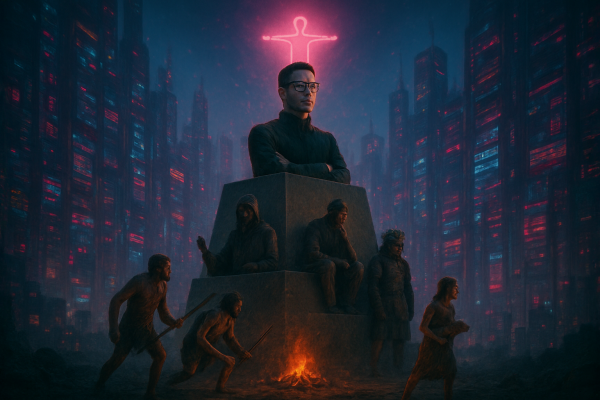
This path of choice has indeed shaped the world we see today. From steam engines to AI technology, we enjoy the results of highly organized, efficiency-oriented modern systems. The birth of these results is, to some extent, due to humanity’s choice of patriarchy, centralization, stratification, and war as the main logic of social organization.
這樣的路徑選擇確實造就了今日世界的模樣。從蒸汽機到AI科技,我們享受著一個個高度組織化、效率導向的現代體系成果。而這些成果的誕生,某程度正是因為人類選擇了父權、集權、階層化與戰爭作為主要社會組織邏輯。
Reinterpreting “Diverse Civilizations” in the Abundance of the World
在世界的餘裕之中,重新理解「多元文明」
History cannot be rewritten, and we cannot assume whether matriarchal societies could have produced today’s technological achievements. Therefore, we should, under the current conditions of established systems and resource abundance, re-embrace those values that have been overshadowed: coordination instead of conquest, coexistence instead of oppression, and diversity instead of singularity.
歷史無法重來,我們也無從假設母系社會是否能孕育出今日等量的科技成就。正因如此,我們更應在當代已有制度與資源餘裕的條件下,重新拾起那些曾被掩蓋的價值:協調而非征服、共生而非壓制、多元而非單一。
Understanding historical choices does not equate to continuing to forget the suppressed cultural spirits. Perhaps we cannot reconstruct the original forms of animistic or matriarchal societies, but we can revive respect for nature, community, and women’s values in modern society. This may allow us to find a lifestyle closer to the essence of life beyond the dominance of powerful nations and technological orders.
理解歷史的選擇,並不等於繼續遺忘曾被壓抑的文化精神。也許我們無法重建泛靈或母系社會的原貌,但我們可以在現代社會中,重新喚起對自然、社群與女性價值的尊重——那可能會讓我們得以在強國與科技秩序之外,找到一種更貼近生命本質的生活方式。
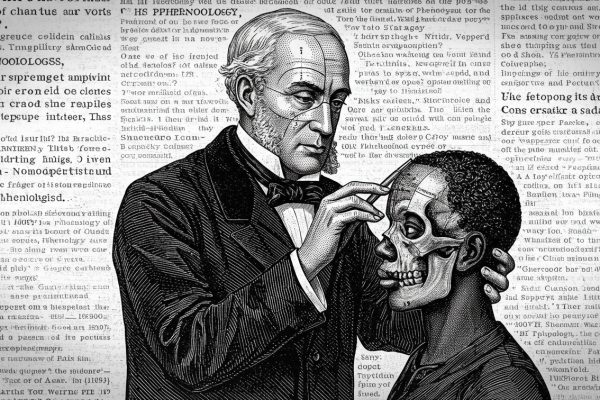
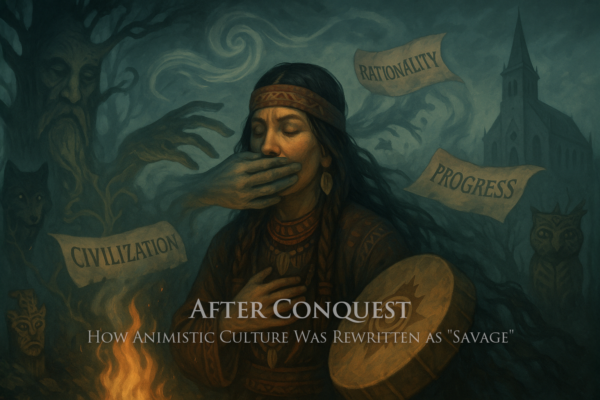
Are the declines of matriarchal and animistic civilizations an inevitable historical outcome, or are they results of being deliberately marked as “backward” or “savage” by dominant systems? In the next article, we will explore the power dynamics behind such “civilization labels” by examining the Vikings, Baiyue, or the Amazon.
這些母系與泛靈文明的退場到底是歷史的必然還是被強勢體系刻意標記為「落後、野蠻」的結果?
下一篇我們再來從維京、百越或亞馬遜出發,聊聊這樣的「文明標籤」背後的權力運作。