A River, A Civilization
一條河流,一種文明
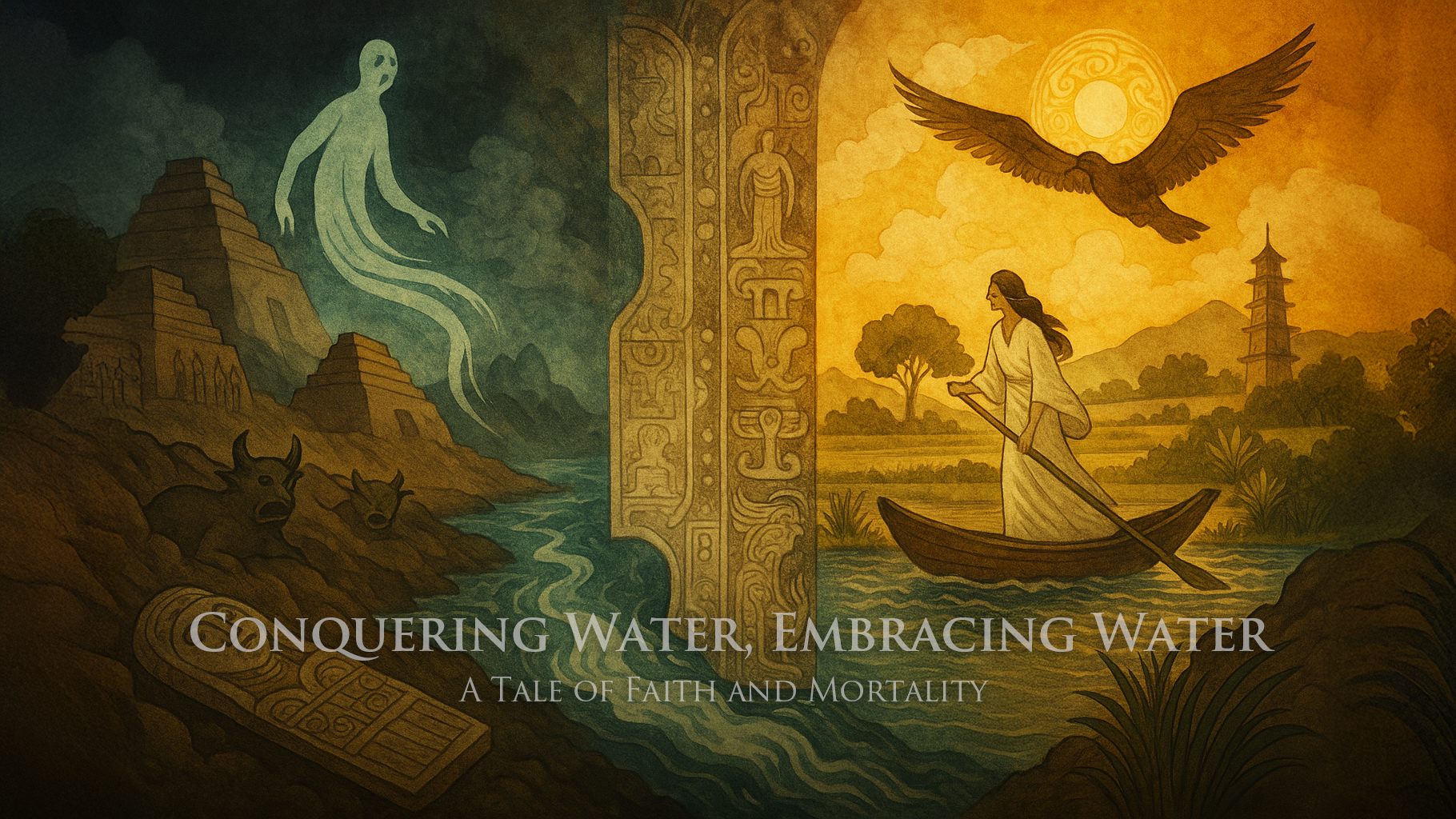
Water has always been an essential element in the origin of human civilization. The Yellow River and the Yangtze River, as well as the Nile and the Euphrates, irrigate plains that are the birthplaces of ancient civilizations. However, different hydrological characteristics have created distinct cultures and religious views. Here, we compare two very different water characteristics: “conquering” and “harmonizing,” and explore their deep impacts on views of death.
從人類文明的發源地看起,水總是不可或缺的元素。黃河與長江、尼羅河與幼發拉底河,這些大河所灌溉的平原,是古代文明的誕生地。但不同的水文特性,卻造就了迥異的文化與宗教觀。在此,我們以「征服型」與「調和型」來對比兩種截然不同的水域性格,並探討它們對於死亡觀的深層影響。
Conquering the Floods: The Yellow River and the Tigris-Euphrates
征服水患的文明:黃河與兩河
The Yellow River and the Euphrates River in Mesopotamia are both cradles of civilization, yet they share a common characteristic of being “difficult to tame.” The Yellow River often changes course and floods, earning it the nickname “suspension river”; meanwhile, the Tigris and Euphrates can suddenly rise, altering the landscape. To survive, people had to build dikes and irrigation systems, engaging in collective irrigation projects, which led to centralized authority and strict social organization. These civilizations displayed a strong consciousness of “conquering nature,” shaping a view of death that emphasizes “controlling order and exorcising spirits.”
黃河與美索不達米亞的幼發拉底河—底格里斯河,雖同為文明搖籃,卻有著共通的「難以馴服」特性。黃河經常改道、泛濫,素有「懸河」之稱;而兩河流域則時有暴漲,改變地貌。為了生存,人們必須修築堤防、水利系統,進行集體的灌溉工程,這促成了中央集權與嚴密的社會組織。這些文明展現出強烈的「征服自然」意識,進而形塑出一種「控制秩序/驅邪鎮魂」的死亡觀。
In terms of religion, these cultures often see the afterlife as a dark realm, isolated from the living. For instance, the “Land of the Dead,” Irkalla, in Mesopotamia is a place where souls wander hopelessly like shadows. The concept of the underworld in Han culture, along with the idea of “restless ghosts,” reflects this cosmic view of a divide between life and death.
在宗教上,這些文化往往將死後世界視為陰暗、與生者隔絕的境域。例如美索不達米亞的「死亡之地」埃爾蘭圖(Irkalla),是靈魂如影般無望逡巡之處。漢文化中的地府與「鬼魂不安」的觀念,也反映出這種生死斷裂的宇宙觀。
This also resonates with the existence of many rituals for pacifying spirits, such as human sacrifices in the Shang Dynasty, which later evolved into customs like burial mounds, tablets, and paper money as material substitutes, all aimed at “settling the souls” to prevent them from disturbing the living. Even the legend of Zhuge Liang inventing buns to replace human heads is closely related to this cultural logic.
這也呼應了許多鎮魂儀式的存在,如殷商的殉人、後來演變為衣冠塚、牌位、紙錢等物質代替的習俗,都是為了「安置亡魂」,防止其擾動生者。甚至諸葛亮發明饅頭代替人頭的傳說,也與此一文化邏輯密切相關。
Civilizations in Harmony with Water: The Nile and the Yangtze
與水共生的文明:尼羅河與長江
In contrast, the civilizations of the Yangtze River and the Nile embody a “harmonizing” view of water. The Nile has a stable and predictable flooding pattern, which the ancient Egyptians regarded as a gift from heaven and earth, even deifying the river as the brother of Osiris. This concept of the cycle of life permeates Egyptian imaginations of the afterlife—death is not an end but a transition to another stage, where one can still be with the gods after judgment and be reborn.
與之相對的,是長江與尼羅河文明的「調和型」水觀。尼羅河水源穩定、氾濫可預測,古埃及人將每年定期氾濫視為天地恩賜,甚至將尼羅河神格化為奧西里斯的兄弟。這種生命循環的觀念,也滲透至埃及對死後世界的想像——人死後並非終結,而是進入另一階段,經審判後仍可與神同在,重獲新生。
The Yangtze River shares similar hydrological characteristics. It originates from the snow and ice of the plateau, with abundant and stable water flow, irrigating vast fertile plains and nurturing rice culture and a lifestyle in harmony with water. In religion, the Chu culture is most representative: the Chu people believed that after death, one could “ascend to immortality” or “become a deity.” Souls are not confined to the underworld but can communicate with the heavens and the earth.
長江亦有類似的水文特性。它源自高原冰雪,水量豐沛穩定,流經大片肥沃平原,灌溉了南方農業,孕育出水稻文化與與水和諧共處的生活觀。在宗教上,楚文化最具代表性:楚人相信人死後可「升仙」、「成神」,靈魂並不困囿於陰間,而是能與天地山川溝通往來。
The afterlife depicted in “Chuci” (Songs of Chu), such as Qu Yuan’s visions of ascending to the heavens in “Nine Chapters” and “Li Sao,” is filled with mystery and hope rather than fear. This cosmology resonates with the contents of the “Book of the Dead” in Egyptian mythology.
《楚辭》所描繪的死後世界,如屈原在〈九章〉與〈離騷〉中的昇天想像、靈魂的遠遊,不帶恐懼又充滿神秘與希望。這樣的宇宙觀與埃及神話中「亡者之書」的內容遙相呼應。
The Yellow River has shaped a religious structure that emphasizes order and ritual, while the Yangtze River nurtures a belief system that is flexible, inclusive, and values the connection between individuals and nature. The hydrology not only shapes the landscape or natural environment but also plays a profound role in constructing the cosmology of civilization. From collective projects that conquer nature to spiritual imaginations that coexist with water, a river can determine how people live, believe, and mourn. Water, originally formless, conceals a powerful force that shapes civilization.
黃河塑造了強調秩序與祭祀的宗教結構,長江則滋養了靈活包容、重視個體與自然感通的信仰模式。水文形塑的不只是地貌或者自然環境,更深刻地參與了文明的宇宙觀建構。從征服自然的集體工程,到與水共生的靈性遐想,一條河流可以決定人們怎樣生活、信仰與哀悼。水,原是無形,卻深藏形塑文明的力量。